











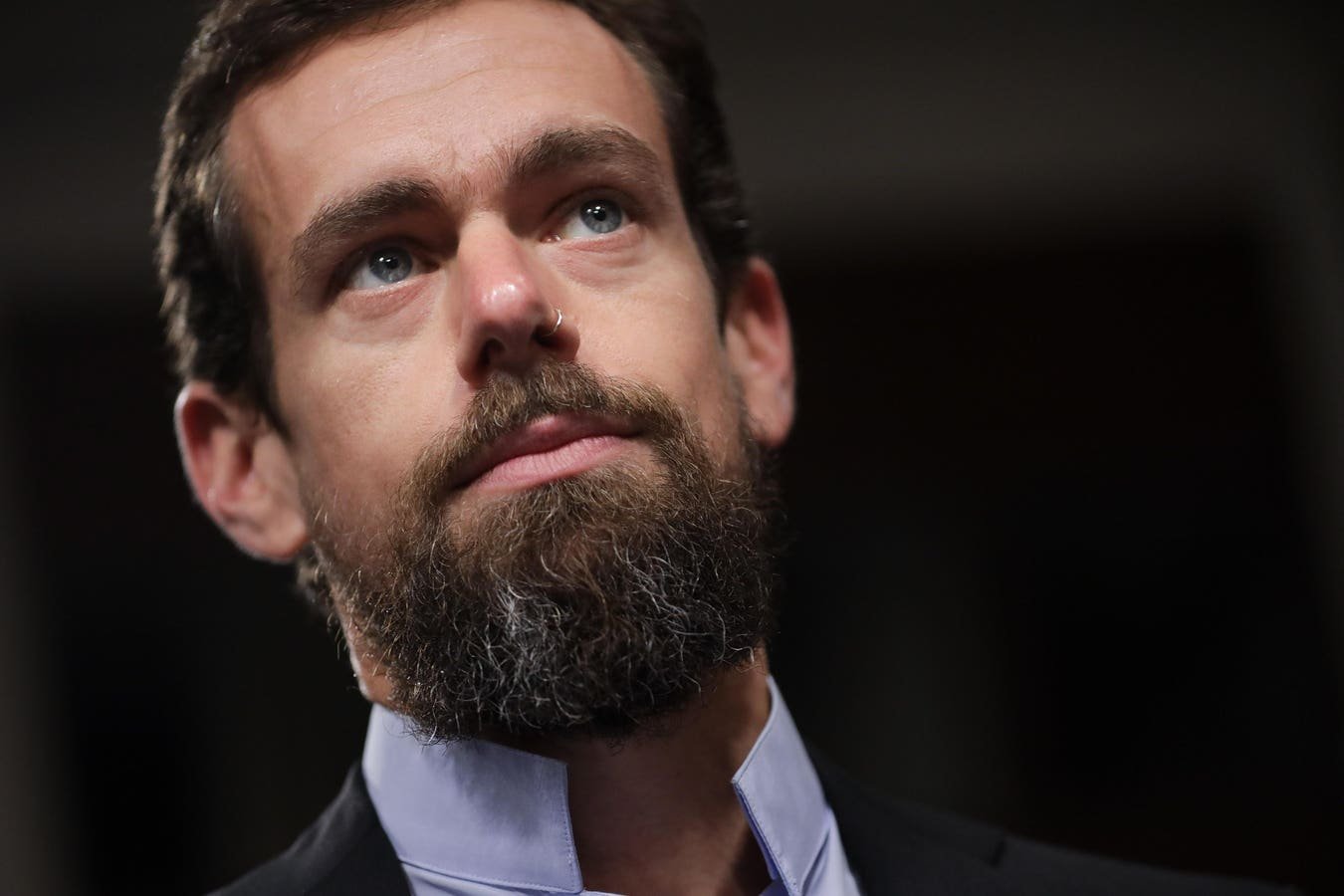
Jack Dorsey at h.wood Group & Revolve ‘Homecoming Weekend’ at Pacific Design Center on February 12, 2022 in West Hollywood, CA. (Photo by Roger Kisby/WWD/Penske Media via Getty Images)
Penske Media via Getty Images
Jack Dorsey announced on Thursday that Block — the company behind Square, Cash App and Afterpay — is cutting more than 4,000 employees, nearly half its workforce. Wall Street responded immediately, and the stock jumped nearly 24% in after-hours trading. Within minutes, the market had added about $8 billion to Block’s valuation – if you do the math, and math is the real story here – that’s about $2 million per job eliminated.
What Dorsey Really Said
Dorsey characterized the cuts as an AI-driven structural change rather than a financial emergency. Block’s business is growing, he wrote to a letter to shareholders — gross profit increases, customers increase, profitability improves. But “intelligence tools,” combined with “smaller and flatter teams,” have fundamentally changed what it means to run a company.
He had two options: taper off over months or years, or act decisively now. Choose the second one. “Repeated rounds of cuts are devastating to morale,” he wrote. Then the kicker – a prediction addressed to every CEO reading: “Within the next year, I believe the majority of companies will come to the same conclusion.”
This doesn’t come out of nowhere. Block has created its own open source AI agent called Goose from early 2025. The tool — which connects to any large language model and automates everything from code generation to data analysis — is already used by 60% of Block’s workforce every week. said Block’s CTO Sequoia last year, Goose saved engineers 8–10 hours per week and is on track to eliminate 25% of manual hours companywide. Yes, 25%.
In other words, the order matters, too — Block built the tool, counted the profits, and then cut accordingly.
The motivation engine
Here’s what’s doing right now, far from anecdotal: Wall Street’s reaction
creates a powerful feedback loop.
This is almost like an instruction manual: a CEO tells the market “we’re cutting 40% of our workforce because AI makes it possible” and the stock immediately jumps 25%. Every board in Silicon Valley (and beyond) is now looking at this chart. The message is unmistakable: the market will pay a premium for companies that turn AI capability into downsizing.
The block isn’t even the first. Klarna shrank from 7,000 employees to about 3,000 in about four years, largely due to AI attrition. Salesforce cuts 4,000 support roles after CEO says AI is handling half of them
company work. Amazon, Microsoft, Chegg, Duolingo — the list goes on. Challenger, Gray & Christmas were roughly tracked 55,000 job cuts directly attributed to artificial intelligence only in 2025.
But none of these moves were up 25% on the same day. Block did — and the scale of the reward won’t go unnoticed.
The awkward question
There’s a legitimate debate about how much of this is real and how much is what skeptics call “AI washing” — blaming the technology for cuts that are actually due to pandemic-era headcount and old-fashioned cost pressures. Block more than doubled its workforce between 2019 and its peak, from under 4,000 to over 10,000. Its stock, meanwhile, is down more than 75% from its 2021 high of nearly $282. Wharton professor he pointed out that it is hard to imagine 50% efficiency gains across the business from the new tools.
Dorsey himself acknowledged the Musk parallel — and it’s worth remembering that Musk’s 50% cut at Twitter in 2022 was the move that rewrote the rules for how far a CEO could go in a single move. Dorsey watched this experiment unfold from an unusually close distance, given their intertwined history.
But what’s different now is that Dorsey has proof. Block built Goose, measured productivity gains, open-sourced the tool and restructured the organization around it before pulling the trigger. Whether you agree with the decision, the process was more methodical than a vibes-based bet on “AI will figure it out.”
What does this signify?
The real change isn’t about Block or Dorsey. It’s about what happens when capital markets begin to explicitly price in the efficiency of AI-driven work — when the “AI dividend” becomes a line item that investors expect, rather than a theoretical upside buried in an earnings call.
My bet is that Dorsey’s prediction is directionally correct, even if the timing is aggressive. Not every company will cut it deep, and many that try will find (as Klarna did) that AI can’t yet replace the judgment, empathy and context that humans bring to complex tasks. But the incentive structure is now locked. Markets reward the cut. Announcement of tables. CEOs act.
For operators and investors, there are three things to watch out for: First, which companies have actually built in-house AI tools (like Goose) vs. which ones are using “AI” as a cover for late restructurings – the distinction is hugely important for long-term execution. Second, if the productivity gains are sustained over the next 2-3 quarters, or if Block quietly rehires (as Klarna did in part). And third, the geopolitical gap. Dorsey executed this restructuring in just one day. In the EU, labor law would require months of works council consultation before a single worker could be fired. If U.S. companies can turn AI gains into radical headcount reductions overnight while European rivals are still filing, the valuation gap between U.S. tech and the rest of the world isn’t going to close. It will become a canyon.
This may be the most underrated consequence of AI change: not which companies adopt AI the fastest, but which legal systems allow companies to act on it.
The price is now public. The question is not just who moves next – it’s who is allowed.


