











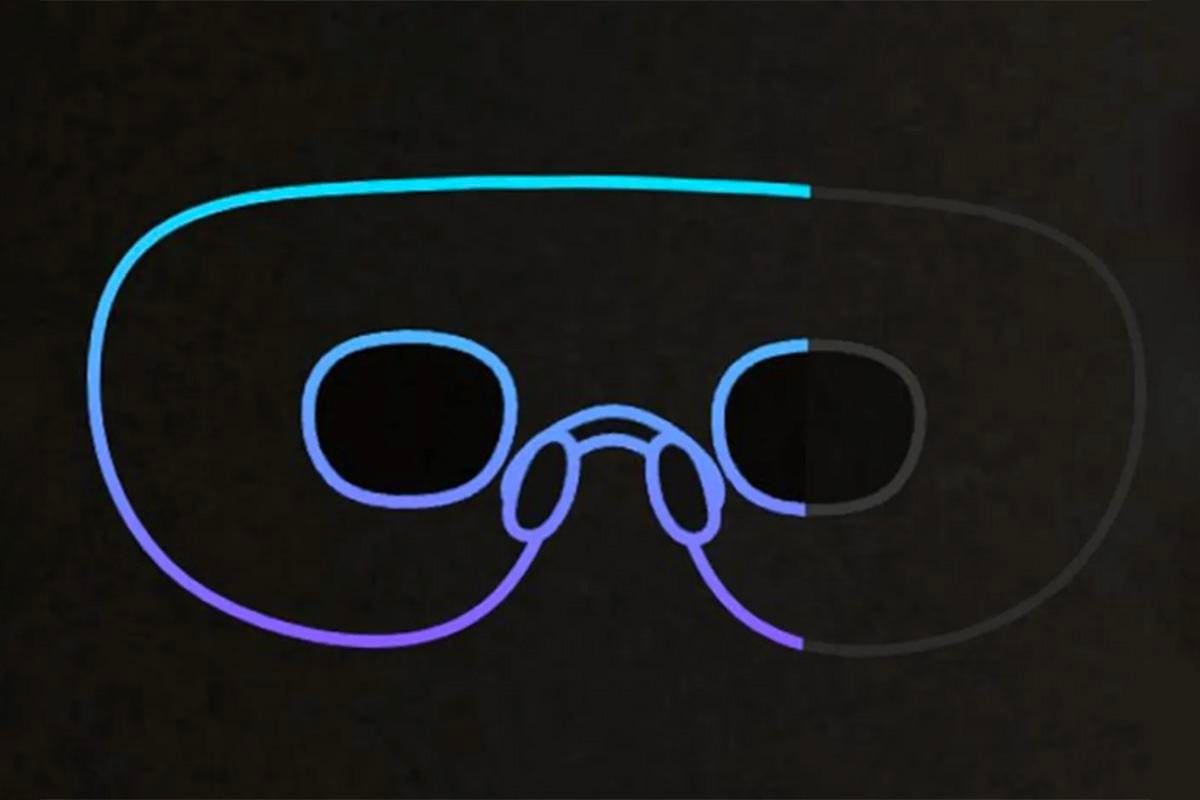
Data miners have uncovered more clues about what the Meta Quest 4, or at least an upcoming Meta VR headset, will look like.
Meta Quest headset diagram
After
What resulted from these efforts is an extremely low-resolution rendering of the device and a highly stylized linear design of its basic shape. But that’s still enough to show how significant this departure from Meta Quest 3 is.
The data miners that follow the web handles Moon and Samulis pulled this information from the Meta firmware — ostensibly part of the software that helps owners set up their headsets.
They offer a look at a headset that clearly appears to be a VR device rather than a pair of smart glasses, and one that also features eye tracking.
Size and bulk are the main ways this handset departs from what we have today. While you probably wouldn’t want to walk around town with one of these upcoming Meta headsets, it’s definitely smaller and probably a lot lighter than a Meta Quest 3.
This is partly due to two factors that you can’t see in these images. Reports suggest that this headset will have a separate computer, used to house the processor and battery, rather than baking them into the headset itself.
Also missing from the renderings is the back of the headset and how exactly it attaches to the user’s head. However, since this design is still a long way from that of the Ray-Ban Meta Display, it is likely to require more than a pair of eyeglass frames.
Expected Meta Quest 4 Features
A new feature has already been revealed in these leaks: eye tracking. This is used in the Apple Vision Pro to allow you to select items on the screen by looking at them, and was used in the Meta Quest Pro but not the Quest 3S or 3.
Earlier reports also suggest that Meta is considering a switch to micro OLED display technology, rather than the 2,064 x 2,208 LCD panels used in the Quest 3. While this would increase immersion and image quality, it’s yet to be seen on any vaguely affordable handset. Pimax’s Crystal Super micro-OLED costs $2,199, for example.
The fact that these leaks are mentioned in software reports suggests that progress in the development of the headset may be quite advanced. However, recent serious changes at Reality Labs reduce confidence in the idea that these headset designs remain concrete.
Amidst studio closings, staff cuts at Meta’s Reality Labs, and an official shift of Horizon Worlds to mobile, Meta CTO Andrew Bosworth confirmed that the company is taking a new step-back approach to VR. “We’re going to let VR be what it is,” Bosworth said Worthy in an interview earlier this year. Bad news for a Meta Quest 4?


