











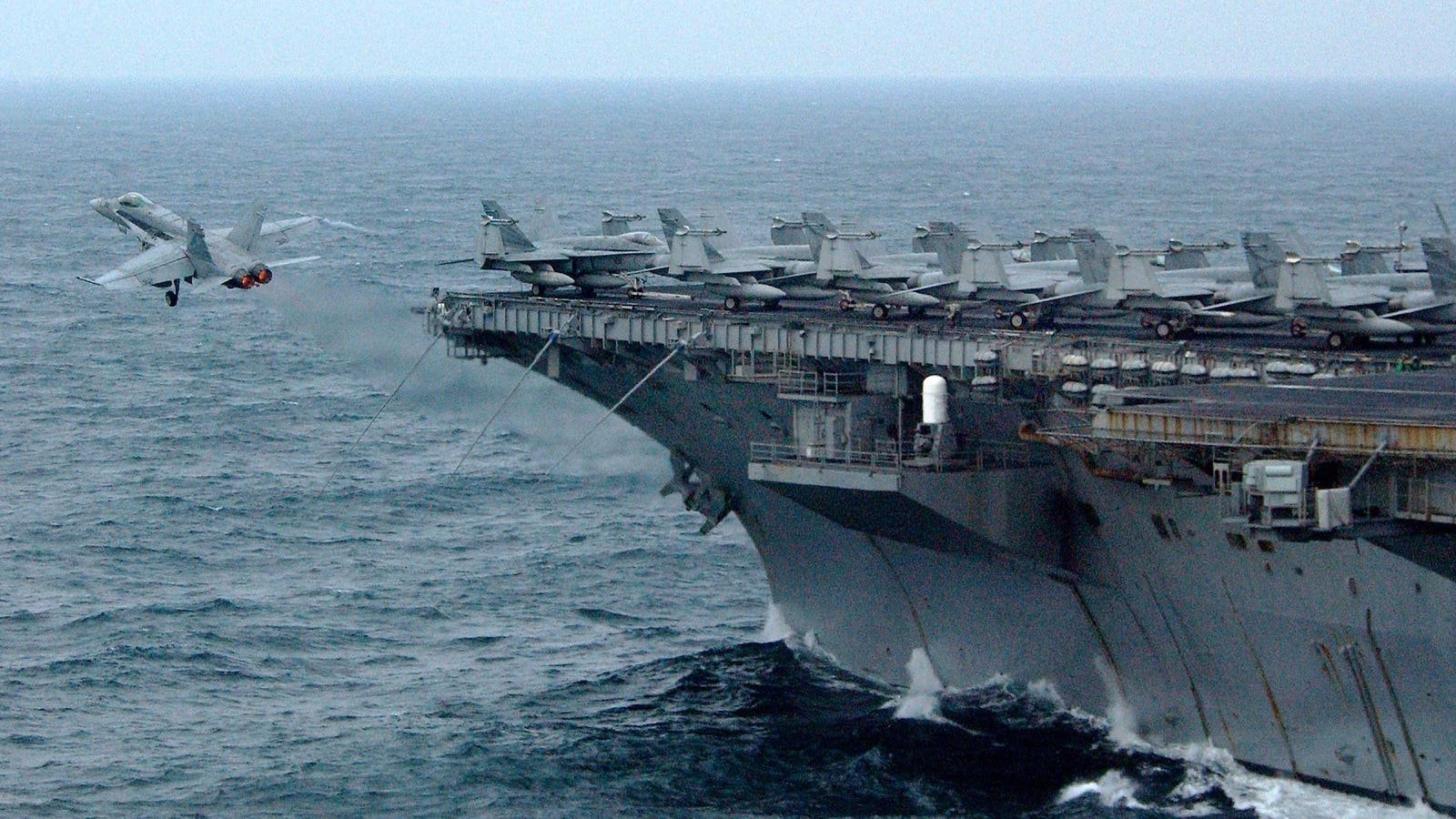
As the US builds military assets around Iran, the world is asking if a bombing attack will occur, how soon, and if so for what purpose. The answer to the first is likely yes. And probably after India’s Prime Minister Modi has completed his visit to Israel in a few days. So expect the attacks to start a week or so later. And expect them to last a lot longer than last time. Why does the evidence show that we are not witnessing exercise? Mainly it amount of material and some types that definitively point to specific designs like E3 Sentries for battlefield coordination.
The key question is why and why now? As widespread comments have argued, we are told that relevant Iranian assets were neutralized in the previous round of bombing. Some have claimed that the new campaign will target chemical and biological weapons that need disposal – but objections to that theory are emerging. The danger to surrounding populations, for one thing. For another, you’d think that such threats, if they were significant, would be targeted the first time. So the question remains why. There are several scenarios.
The reader should know that I have covered the region for over three decades for leading US media outlets. This column alone among commentators has predicted, repeatedly, that during a Trump administration Russia would be able to hold Ukraine while Israel would be allowed to bomb Iran. This column has a solid history of getting things right. Now let’s look at the scenarios. Why would the US attack Iran at this time?
To free the people from slaughter and repression, i.e. regime change? It’s unlikely, since Washington tends, these days, to be unsentimental in this way, not least because any such scenario requires boots on the ground to oust the regime. So the argument goes. It’s a false argument, but the US might believe it. Wrong, because we see that Turkey ousted Assad without using Turkish troops but using its own proxies. The US could do the same, with adequate planning, by installing Reza Pahlavi. He has popular support in the country. Some argue that Iran is tougher than Syria because the mullahs’ regime is more entrenched and has more outside support.
Syria certainly had plenty of Russian support, but Syria was not that strategically important. Neither Moscow nor Beijing will allow regime change for critical strategic reasons. For Russia, Iran acts as a strategic gateway to the Caucasus and Central Asia. A pro-Western Iran would likely release the Russian stranglehold on Chechnya, Georgia, South Ossetia, all the way to Turkmenistan and beyond. In addition, the Tehran regime acts as a military ally of Moscow in providing critical Shaheds and the like. Also, China is fully invested in maintaining the Mullahs as a vital source of oil. So, overall, regime change is not the current end goal of the US.
Has the Tehran regime rebuilt its nuclear and other assets, or were they not sufficiently depleted the first time? This is more plausible if not entirely convincing. The truth is, the build-up this time around looks a lot more complete than before. The US is therefore planning a much more widespread campaign of destruction. In other words, the plan involves total depletion of the regime’s resources and not simple targeted attacks on WMD sites, be they nuclear, chemical or biological.
The regime apparently does not offer the necessary volume of concessions and did not receive the first message of full-scale cooperation. What would the biggest collaboration look like? Halt nuclear and WMD research altogether in a fully verifiable manner. Cooperation with the US in the oil sector, perhaps bringing in US companies. The complete cessation of the threat to Israel or US Middle East assets, meaning disarmament or elimination of Shahed missiles and production and the like. Iran would have to effectively withdraw from its role as a regional power altogether. The very fact that he can still threaten the US with significant retaliation shows that he has not fully disarmed.
The fragmentation of Iran into component ethnic regions leaving a much reduced region under regime control? As this column has previously reported, Iran is geographically made up of over 40% ethnic zones, including Azeri and Kurdish. Some version of what happened in Iraq could be the intended scenario. A more federal arrangement with greater autonomy for Kurds and Azeris. Full independence for these zones is not going to happen – there are already reports of Turkish mobile units massing on the Kurdish-Iranian border. Which means there is no independent Kurdish zone.
The Turks prevented the Iraqi version of a Kurdish independent entity from forming in 2003 by denying US troops permission to invade northern Iraq through Turkey. Erdogan stopped it this time by quietly gathering the necessary votes in parliament to say no to the US demands. Ankara believed that the American occupation of the Kurdish region would prevent Turkish influence in shaping the future of the zone. He distrusted the US plans and believed that it would lead to an independent Iraqi Kurdish entity which would then encourage the Kurds of Turkey to secede and try to join the Iraqi entity. Erdogan is acting similarly now on Iran, planning, with Turkish troops, to suppress secession by Iran’s Kurds.
As for the Azeris, they could, in theory, have outside support to secede in unity with the country of Azerbaijan, as both Israel and Turkey are fully aligned with Baku. But this scenario is also not happening because, these days, Israel and Turkey do not agree on anything. But, yes, some version of the Iraqi script applied to Iran is on paper. This is likely the goal of the new US campaign against Iran. A much looser federal country with much less power at the center and a much reduced strategic regional footprint.
How would this actually be done? It would be a process that would take some time. And it would require a fully compliant leader in Iran. Which means that Larijani, the current interlocutor in Tehran, has to go. It clearly did not meet US requirements. But this is only the beginning. Anyone pushing Larijani to resist US demands, specifically other top IRGC and Mullah leaders, will be collectively and personally targeted in the coming attacks. They, in turn, may feel that, with outside help, they could anticipate and hide from the threat. But given the amount of US power being deployed, this campaign does not look like the latest offensive, but rather the ongoing campaign against Saddam.
The people at the top in Iran are unlikely to survive nor the power structure that protects them from the people – who will get details of their hideouts. Anyone who survives is likely to realize that their survival was no accident and act accordingly this time. That, at least, is the likely plan.
Only two conditions will stop this scenario. 1) Iran’s leaders are taking the threat seriously and taking a radical step toward greater concessions. 2) They give the US such a bloody nose in hostilities that the Americans will pressure Washington to come down. Already a top Pentagon strategist (Dan Cain) has noises that success in the offensive campaign would prove very costly. The US could declare a victory and go home at a certain point in hostilities before triggering major Iranian retaliation. But that would only lead to repetition down the line.
As US assets gather for an attack on Iran, a longer campaign against Khamenei and associates appears imminent (Photo by Scott Nelson/Getty Images)
Getty Images


