




The ugly combination of inflation and recession is maximizing pain for consumers and businesses, while also leaving policymakers without their usual levers to guide the economy. It creates a crisis that is greater than the sum of its parts, says economist Kellogg Philip Brown.
“Stagflation is when the economy is stagnant and inflation is rampant,” says Braun, clinical professor of economics at Kellogg. “And the sum of two negatives equals three negatives.”
The United States has been lucky to avoid stagflation for decades, since the oil shocks of the 1970s. But after fears of stagflation subsided during the COVID recovery, rumblings have returned following military actions in Iran and across the Middle East.
In 2022, Braun was one of the voices downplaying the risk of stagflation. But four years later, he’s more concerned about where the U.S. and global economies are headed.
“Today’s environment is more like the 1970s than it was four years ago,” says Braun. “The environment is ripe for stagflation with this oil price shock.”
Gas lines and a pain in the wallet
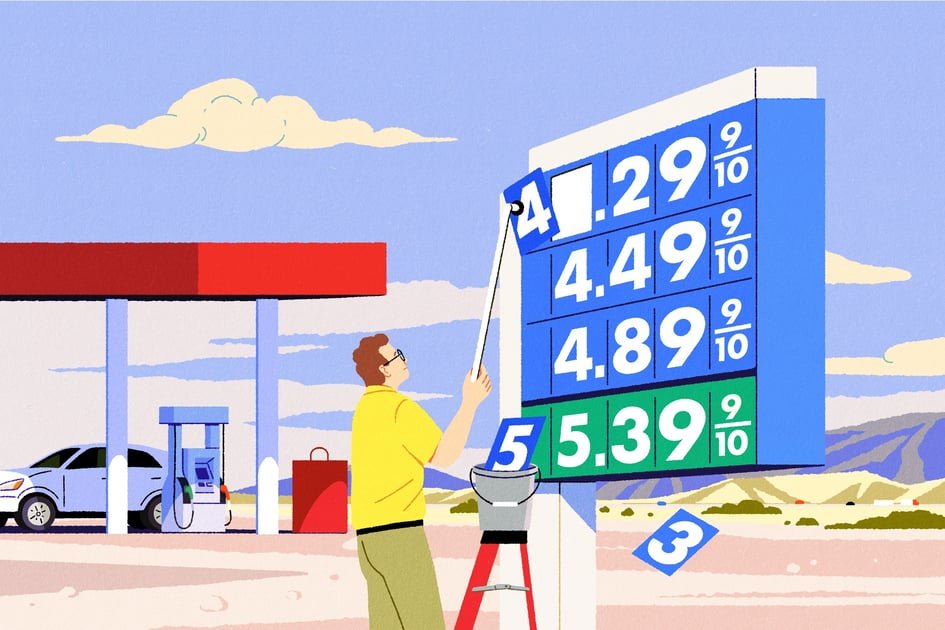
The enduring image of the stagflation of the 1970s is long lines of cars waiting to fill up their tanks. An embargo on Western countries by the Organization of the Petroleum Exporting Countries (OPEC) caused a global supply shock and sent oil prices quadrupling in less than a year, with effects reverberating across the global economy.
But Braun and other economists believe it wasn’t the oil crisis that started stagflation in the 1970s — it just created the conditions for it to happen. Instead, poor monetary policy decisions made by the Federal Reserve and other central banks ultimately triggered the stagflationary spiral.
Worried about the oil shock causing an economic recession, the Fed quickly cut interest rates. But this only fueled inflation further.
“You had a combination of actually going into a recession because of that supply shock and then the Fed ramping it up, with low interest rates pushing inflation up,” Braun says. “They shouldn’t have tried to deal with the price shock with lower interest rates. They should have suffered the pain of the recession and kept interest rates high.”
The Fed’s influence is complicated by the slow diffusion of its policy changes into the economy, compared to the rapid effects of a price shock. The stagflation of the 1970s proved how bad this timing can be.
“Whenever the Federal Reserve cuts interest rates, there’s going to be a lag until that actually helps keep us out of a recession,” Braun says. “What we saw in the 1970s is an oil price shock that pushes the economy into a recession, and then the Fed tries to fight it. And since it will take a few quarters or a year for the Federal Reserve’s decision to have an impact, when it hits, it’s coincident with the recession.”
Echoes of history
In the early 2020s, as the global economy recovered from the COVID pandemic and its disruptions and supply chain issues, concerns about stagflation resurfaced.
When inflation soared, critics of the Federal Reserve said the central bank had kept interest rates low for too long and a recession would send the U.S. back to the struggles of the 1970s. Then, when oil prices soared at the start of the Russia-Ukraine war, those concerns intensified.
But the recession never came, oil prices calmed, and Braun’s optimism for 2022 to avoid stagflation was confirmed.
Unfortunately, he is not so optimistic today. Economic data released shortly before the start of the conflict in Iran showed a slowing economy and rising unemployment, “so we may already be headed for a recession, even without the oil price shock,” Braun says. “That could push us further.”
To assess the risk, Braun mainly monitors two factors: if oil prices remain high for a long time and how the Federal Reserve responds. At the March meeting of the Federal Open Market Committee (FOMC), the central bank kept interest rates steady and signaled no cuts in the near future.
But with Federal Reserve Chairman Jerome Powell’s term ending in May, the future of US monetary policy is uncertain. There is a danger that the mistakes of the 1970s will be repeated.
“We expect the new Federal Reserve chairman to be more accommodating to the Trump administration’s demands,” Braun says. “And in those circumstances, it would be cutting rates in a situation where we don’t want to do that because it’s going to push us into stagflation. So that’s problematic.”
Prepare for the worst
Should stagflation hit the United States, there’s not much we can do except batten down the hatches, Braun says. Investors, for example, can look to history for a guide to riding out the storm.
“When you adjust for inflation, stock returns were flat in the 1970s, so there was no real gain in investment portfolios [over the entire decade]says Braun. “That’s what people should be worried about. They need to put their portfolio in assets that are more inflation protected than otherwise.”
These “safe” assets include commodities and Treasury Inflation-Protected Bonds (TIPS), which adjust their principal to the rate of inflation.
For businesses, the usual recession playbook will be further complicated by increased prices across the supply chain, but without the strong consumer spending they’ve enjoyed since the pandemic.
“Businesses should expect higher prices across the board and reduced demand for their products,” says Braun. “That’s what they have to prepare for.”
And while U.S. consumers may not see long natural gas lines again — U.S. oil production is at record highs and may ease past shortages — they can expect to pay more at the pump, and everywhere else, until stagflation ends.
“Don’t let your tank get too dry and be conservative with your budget for a few years,” says Braun.
