




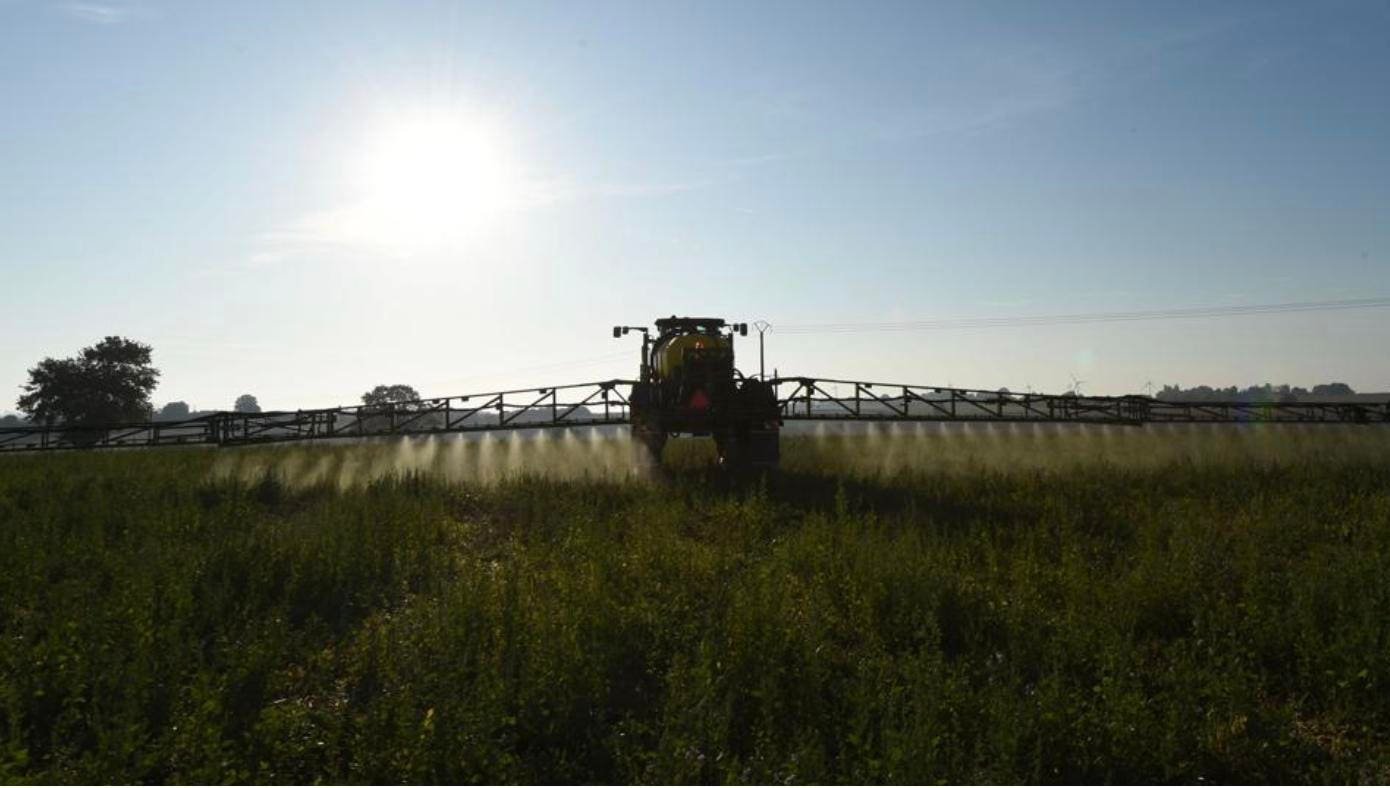
Spraying glyphosate in a field
GETTY IMAGES
It was the best time. It was the worst of times.
It was the time when America was made healthy again. It was time to turn a blind eye to glyphosate.
Glyphosate is the elephant that remains throughout the Trump cabinet.
On June 25, the Supreme Court sided with the Trump administration in a 7-2 decisionstating that Bayer, the parent company of Monsanto’s Roundup, is protected from state-level lawsuits because federal regulation does not require them to warn about alleged cancer risks from such products.
“Millions of voters who identify as MAHA are extremely disappointed,” activist Kelly Ryerson, also known as Glyphosate Girl on social media, he tells me. “The timing was so sad because we were so excited when the Executive Order came out and then [the Supreme Court decision happened. That took a lot of wind out of the sails.”
Instead, within hours of the decision coming down, President Donald Trump signed the Executive Order that Ryerson speaks of, including a ’Regenerative Feedstock Rule’ proposed by the USDA that claims to incentivize farmers to implement regenerative practices by connecting them with new markets. The Department of Health & Human Services did not release a statement following the decision nor did it respond directly to a request for comment.
“It’s not new money–it’s moving money within programs to mud practices that were already being funded,” Scott Faber, SVP of Government Affairs for the Environmental Working Group, tells me.
According to the World Health Organization, glyphosate, the active ingredient in Roundup, is a probable carcinogen. Thousands of ‘failure-to-warn’ lawsuits against Bayer from plaintiffs who claim to have gotten cancer after using Roundup are now expected to be blocked. Glyphosate, which is produced in the US only by Bayer, is sprayed on 300 million acres of American farmland every year.
Many initiatives spearheaded by MAHA leader, HHS Secretary Robert F. Kennedy Jr, like banning artificial food dyes, adding more nutritious meals in hospital settings and promoting whole foods in lieu of ultra-processed foods are unquestionably beneficial and a step in the right direction for public health and have been accomplishments in the first 18 months of the second Trump Administration. Many leaders in regenerative agriculture have felt some sense of hope given that regardless of politics, Secretary Kennedy has, at least, put attention on regenerative agriculture.
Regenerative practices on a farm are not truly regenerative if glyphosate is also being sprayed on that same farm.
“The Administration is trying to have it both ways,” Faber says. “The May 2025 MAHA assessment described an environmental health game in which our children were being poisoned by a toxic mixture of pesticides. But in practice, the second Trump administration had either granted or sought legal immunity for pesticide companies and approved new pesticides made with the toxic forever chemical as an ingredient.”
Faber is referring to what happened just days after the Supreme Court decision, revealing the damaging fallout enabled by the decision. Trump’s Environmental Protection Agency, led by Secretary Lee Zeldin, approved more pesticide use of two forever chemicals that can be used on crops in the US.
“The EPA said that Executive Order gave them support to do these forever chemicals, which was never the intent,” Ryerson says. “The intention was to get nutrient-dense food to people. Every way we’re turning, we’re in a wall with Industry that seems to be running the Administration,” she continues. “It feels very much like a war.”
I reached out to the EPA for comment. In part, it tells me, “Every one of these pesticides cleared one of the most rigorous, transparent, science-based reviews in the world. Under FIFRA, EPA registers a product only after career scientists conclude it will not cause unreasonable adverse effects on human health or the environment–a review that weighs toxicity, environmental fate, bioaccumulation, and breakdown products such as TFA at the levels people are actually exposed to.”
The EPA’s entire statement is at the bottom of this article.
While there are many beneficial practices that are considered “regenerative practices” like cover cropping, rotational grazing and wildlife integration, the holistic approach to being considered regenerative isn’t logical if probable carcinogens are being used on the same farms. Glyphosate is shown to damage the health of the soil and the health of the farmers using it, surrounding communities, and the humans who eventually consume that food.
The very government workers who set the national tone and should be regulating the term are now creating more confusion about regenerative agriculture. The term ‘ice cream’ has more regulation than the term ‘regenerative.’
The EPA’s statement to me also says, “Glyphosate remains one of the most relied-upon and widely used tools in American agriculture, sustaining productivity, affordability, and resilience. It is also one of the herbicides that makes conservation tillage and no-till farming practical–a direct link to the soil-health goals of regenerative agriculture.”
While the EPA is correct in stating that glyphosate is one of the most relied-upon tools in American agriculture, a true regenerative system does not spray glyphosate in lieu of tilling. In fact, it’s exactly the opposite. While reducing tillage is encouraged, minimal tillage is acceptable on a true regenerative system if it is being used in lieu of synthetic chemicals. Root vegetables like potatoes and carrots require some degree of tilling to harvest at scale and is less damaging to soil health than glyphosate.
This narrative is detrimental to the overall regenerative movement and continues to cause a harmful domino effect. Businesses large and small, and non-third party certifications like Regenified, are using this same terminology as the EPA to make it seem as if they are implementing helpful “regenerative” practices for marketing purposes while still permitting the use of glyphosate. Nothing is regenerative if glyphosate is in the picture. The federal government is now enabling companies to greenwash the term by promoting this false narrative.
“If the Administration were really committed to supporting regenerative farming, the Trump team would be sending the Farm Bill writers back to the drawing board with an instruction to increase funding for regenerative practices, and to build the infrastructure that helps farmers enroll in those programs,” Faber says.
What is glaringly missing from the slew of press releases touting MAHA’s accomplishments is fervently promoting organic agriculture. Organic produce in the US is heavily regulated by the USDA Organic certification. This certification prohibits the use of glyphosate and other synthetic pesticides, although organic pesticides are permitted. Nearly all announcements about advancing the MAHA agenda from the Trump Administration fail to acknowledge or promote practical solutions to promoting organic agriculture.
“The tale is what happened between May and September of 2025 and the unprecedented lobbying campaign by pesticide groups to scrub the MAHA strategy of any reference to pesticides and the harm they may have,” Faber says.
The HHS, EPA and USDA all claim to put farmers first. Although the MAHA Strategy states that it will reduce costs for small farms transitioning to organic practices, it fails to state anything about reducing the amount of glyphosate in industrial-scale farms, which the vast majority of our food comes from, and of which farmers are feeling forced to use to make a living, and getting cancer at higher rates. Children who live near farms are also developing certain cancers at young ages at higher rates.
Today’s US Department of Agriculture, which grants USDA Organic Certification, is linked to the MAHA movement; USDA Secretary Brooke Rollins herself is a self-described ‘MAHA Mom.’
The USDA did not directly comment on the Supreme Court decision protecting Bayer. In a statement shared to me, the USDA says, “Farmers are the backbone of our nation and are at the front line in our fight to make America healthy again. President Trump has been steadfast in this goal, and the entire administration has been in lockstep in working to deliver healthy, nutritious, and affordable food for Americans. Secretary Rollins is a MAHA mom of 4 children, and completely understands the health issues facing all Americans, as such she will continue to be a fierce advocate for policies that deliver on this objective.”
Ryerson does not believe Rollins is a true MAHA Mom. “She’s never met with any of us. She doesn’t respond to our phone calls,” Ryerson says. “I think that the USDA is where most of that pressure is coming from in terms of keeping the chemical agriculture system alive. I hold Brooke Rollins totally responsible for that. It’s deeply disappointing that she has the opportunity to truly transform this crisis in farming and human health, and she’s taking minimal action about it, meanwhile calling herself a MAHA Mom.”
As a registered Independent, Ryerson was a part of the MAHA movement before it was called MAHA, working with Kennedy to eliminate pesticides from our food supply years before he entered politics, then assisted with his presidential campaign. “We’ve been waiting for any administration to take on these issues,” she says. “We got excited with Obama, but then Industry moved in and he couldn’t do things. It has been one disappointment after another so finally having a seat at the table around food and toxin issues was huge.”
Not everyone who considers themselves a part of the MAHA movement is happy about the Administration’s stance on glyphosate. Some of these people, like Ryerson, hold the Administrations feet to the fire when decisions like this come down. The MAHA folks who stand with Ryerson are not the same MAHA folks in the federal government.
“We can’t possibly be healthy with the number of carcinogens and endocrine disruptors that are surrounding us all the time,” Ryerson says.
The White House MAHA Strategy describes initiatives to fight growing infertility. But fails to mention any impact of glyphosate on fertility, which has been shown to be significant.
According to a 2025 study from Wayne University School of Medicine, “The effects of glyphosate can have significant consequences on women’s reproductive health, potentially increasing the risk of infertility and reproductive disorders such as endometriosis and Polycystic Ovary Syndrome.”
The MAHA Strategy acknowledges as one of the first clauses in the literature that synthetic chemicals pose a threat to children: “Children are exposed to an increasing number of synthetic chemicals, some of which have been linked to developmental issues and chronic disease,” it details, but it seems to nitpick which actions it chooses to take to fight this growing issue.
Another study published in 2021 in the journal, Frontiers in Endocrinology, shows that there is evidence of glyphosate having “detrimental consequences on reproduction,” further describing that glyphosate can be passed by a pregnant woman to her fetus through the placenta and umbilical cord, stating “glyphosate appears to cause multigenerational effects, which might be transmitted transgenerationally to future generations.”
The MAHA–Make America Healthy Again–movement, named after President Trump’s campaign slogan, is inherently political, setting itself up for failure, if success were ever the goal. There is nothing inherently political about food justice and transforming our food system.
“If there are a few issues Americans are united on, one of them is that people should have access to justice when companies make them sick,” Faber says. “So far, our food is less safe, not safer, because of the actions taken by this Administration.”
There are some initiatives that have the potential to turn around the Supreme Court decision. In September of 2027, the Pesticide Registration Improvement Act, or PRIA, is set to expire. “It’s the law that allows the EPA to collect fees from pesticide makers that pay for pesticide reviews. Congress should not renew PRIA without ensuring that people who have been harmed by pesticides have access to justice,” Faber says. “Congress should also demand, as a condition of renewing PRIA, that pesticides have clear warnings, that people are notified when pesticides may be sprayed, and that our kids are safe at school and are not being showered in a toxic cloud of a pesticide drift.”
Ryerson is also working to include a provision in the Farm Bill. “There are some things we would like to see inserted into the language so that it overturns [the Supreme Court decision],” Ryerson says. “People are at their wits end with the government’s willingness to keep poisoning us as they watch their families die of cancer and be barren. There is the ability to make substantial movement in the legislation.”
Glyphosate will not be removed from our agricultural systems overnight. The lack of recognition for the use of glyphosate is the antithesis of regenerative agriculture and a leap backwards in the movement that serves as the most practical solution to fixing our food system. If the administration and its MAHA policies continue to fail by ignoring the industrial scale of glyphosate use in the US, then any of its regenerative agriculture programs are empty. Initiatives to revive agriculture should be applauded only to the extent that their flaws are recognized.
EPA Statement:
EPA’s job is to provide America’s farmers with the best and safest crop protection tools available, while holding each product to the gold standard of science. This is how we’re advancing the Make America Healthy Again agenda: endorsing better tools, retiring older, more persistent chemicals, and investing in practices that reduce chemical use at the source so the country can have safe, abundant food produced with fewer and safer inputs over time.
Each of these pesticides cleared one of the most rigorous, transparent, scientific evaluations in the world. Under FIFRA, EPA registers a product only after career scientists conclude that it will not cause undue adverse effects to human health or the environment—a review that weighs toxicity, environmental fate, bioaccumulation, and breakdown products such as TFA at the levels to which humans are actually exposed.
These decisions directly advance President Trump’s Executive Order 14414, Advancing Regenerative Agriculture and Strengthening American Farm Resilience, which directs the EPA to prioritize the registration of newer active ingredients that can replace older ones. That’s just what it is: tools that move growers away from older, more persistent chemicals—such as organochlorines like DDT and dieldrin, which pose truly unacceptable risks of toxicity and bioaccumulation—and toward newer, more targeted, reduced-risk products. Under Section 2(a), EPA now receives public comments on proposed new uses for active ingredients that are already commercially available. If finalized, they would give farmers a new alternative to the older chemicals used today.
These tools also enable the soil health practices at the heart of regenerative agriculture. Safe, effective, well-regulated herbicides allow farmers to control destructive weeds while relying less on intensive tillage—which leads to erosion and runoff and destroys soil organic matter—enabling no-till and other conservation practices.
Glyphosate remains one of the most trusted and widely used tools in American agriculture, maintaining productivity, affordability and resilience. It is also one of the herbicides that make conservation tillage and no-till farming practical—a direct link to regenerative agriculture’s soil health goals.
At the same time, EPA is committed to innovation and science-based management. Working with federal partners, the agency is promoting more sustainable practices, including measures to minimize reliance on preharvest dry applications of glyphosate—the very practice that the $30 million challenge is designed to find alternatives to. This year, EPA is undertaking a comprehensive, transparent, and rigorous scientific review of glyphosate to ensure that its decisions are fully aligned with the best available evidence and with the protection of public health and the environment.
As part of this review, EPA will:
- Expanding public access to the underlying data and scientific rationale used in glyphosate assessments.
- Review independent, peer-reviewed research on potential cancer and growth risks.
- Identify and pursue opportunities to reduce unnecessary exposure, especially in homes and around schools.
- Work with USDA, HHS, and states to promote integrated pest management and alternative weed control strategies that reduce chemical reliance where feasible.
- Work with USDA and HHS to develop a framework for assessing cumulative exposure to all chemical categories in the food supply. and
- Strengthen monitoring of residues in food and water in coordination with federal partners.
EPA’s goal is clear: to protect children, support farmers, and ensure that decisions are driven by science — not politics or special interests.
