




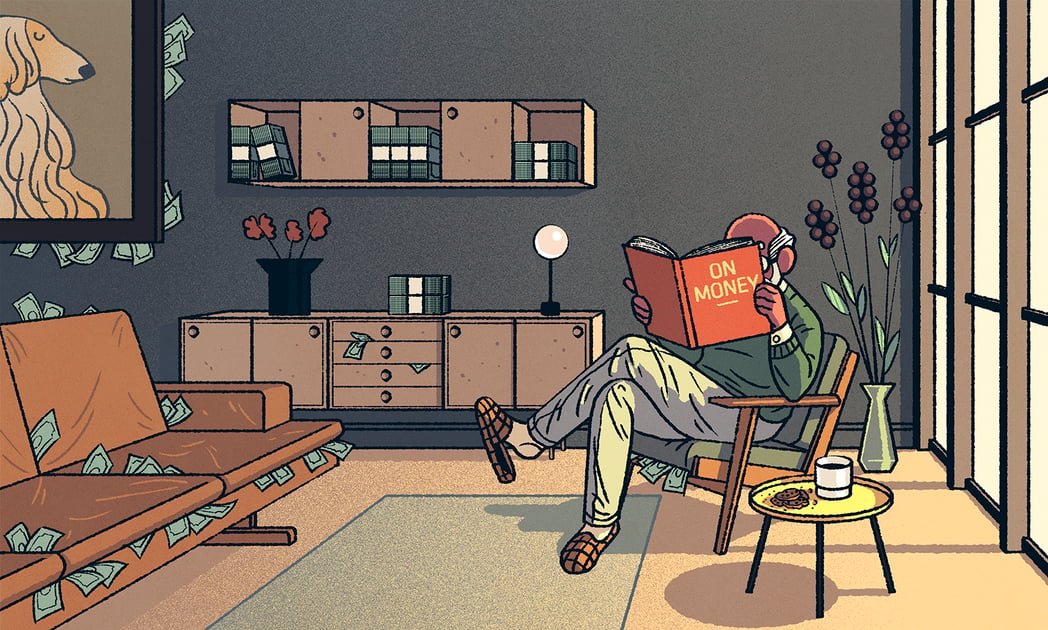
Here are findings and insights from the Kellogg faculty about credit and debit cards, inflation, checking accounts, and 401(k)s that show the surprising ways in which personal financial decisions emerge.
1. The real cost of credit card rewards
You’ve probably seen ads for credit cards that offer all kinds of tempting goodies: cash rewards on purchases, access to fancy airport hotel lounges, points for hotel stays, and more. If you’re lucky enough to have one of these cards in your wallet, 1.5 percent cash back probably sounds like pennies from heaven.
But where does this “free” money really come from, and why are credit card companies so willing to pay it?
Lulu Wang, an assistant professor of economics at Kellogg, found that payment networks like Visa, Mastercard and American Express use rewards to compete for customers — and fund those perks by raising the fees they require merchants to pay.
Marketers are left holding the bag and, in response, pass their increased costs on to consumers. In other words, credit card freebies cost us all, no matter how we choose to pay.
“The rational consumer response is, do what makes sense for your own financial health and reap the rewards if you want,” says Wang. “The moralist might say something like, ‘Would you be willing to put $100 in your pocket by stealing a dime from 10,000 people?’
2. Debit cards can help you save money—and help your community.
Many experts recommend switching from credit cards to debit cards to avoid accumulating debt. But could there be other benefits to using a debit card?
In a study of Mexican households receiving government payments, Kellogg’s Sean Higgins found that switching from cash transfers to debit cards reduced spending and increased savings.
The study also found a domino effect: more businesses—especially small retailers like corner stores—installed terminals to accept the government program’s debit cards. And that broader adoption attracted customers beyond those enrolled in the program—the richest 20 percent of all consumers shifted 13 percent of their supermarket consumption to corner stores.
While the research focused on the political implications of a program used to fight poverty, these results suggest that increased use of debit cards could have benefits beyond the original intent.
“The findings about secondary benefits for small retailers and wealthier consumers suggest that this type of policy to subsidize financial inclusion could be politically popular,” says Higgins, “even among wealthier households who pay a larger share of taxes.”
3. Inflation can lead to smarter spending habits
Since the Covid-19 pandemic, we are all too familiar with grocery inflation and beyond. But a study led by Kellogg’s Sergio Rebelo Why prices rise “like rockets” but fall “like feathers” suggests that consumers may benefit from these shocks in the long run.
The study used a decision-making framework popularized by psychologist Daniel Kahneman. In his book Thinking Fast and SlowKahneman suggested that people either run on autopilot and make choices based on previous decisions that worked out well enough, or think more deeply about choices, which is mentally taxing but likely leads to a better decision.
When prices are stable, consumers choose the first option, sticking to their familiar brands. But in times of hyperinflation, consumers are more likely to take the second option and look for opportunities to save money by changing habits.
The desire to avoid this control explains some confusing pricing practices, such as shrink inflation—when companies keep the price of a product constant but reduce its size. But when prices are forced to rise dramatically, consumers start making smarter decisions.
“It’s a trade-off,” says Rebelo. “You don’t want people’s cognitive load to hyperinflate, but you don’t want people stuck in their old ways, where the mistakes they made will be with them forever. You want to motivate people to optimize a little bit.”
4. Feed your 401(k) early and often
One of the best things you can do for your financial future is to save for retirement. And according to economist Benjamin Harris, the best time to start saving for retirement is early. Really early. As at birth.
Ultimately, building a retirement fund is about ensuring financial security for those golden years, says Harris, who was the executive director of the Kellogg Public-Private Initiative before becoming Assistant Secretary for Economic Policy in the Biden administration’s Treasury Department.
“You get to a point in your life when working is no longer an option because you’re becoming less productive or because you want to make yourself happy,” says Harris. “The only way you can do that is to have some kind of income during that time.”
He offers several steps people can take to achieve these long-term goals: Make sure you meet your employers with a 401(k) contribution. Find financial advisors who don’t charge exorbitant fees. And consider a longevity annuity that pays a set income once retirees reach old age.
But the primary thing, both for you and your children, is to learn financial knowledge. Policies like child trust accounts could help reinforce good habits at a young age, Harris says.
“As a kid, you would know about this account and learn about saving for the future,” he says. “But the basic idea is literally from day one of a person’s life, save them.”
5. Is the secret to a happy marriage… a joint checking account?
When a couple is married, creating a joint household means merging finances. It can be a full conversation, like research shows that money is the main cause of disputes between partners.
But a study by Kellogg School professor Eli Finkel shows one way couples can help preserve their relationship during those critical early years of marriage: by going everything into a joint bank account.
The researchers found that a joint bank account can help couples align their financial goals and adhere to community rules, rather than behaving in a more transactional manner. If all the money is everyone’s money, then partners don’t need to keep score.
Researchers followed 230 engaged or newly married couples and sorted them into groups with a joint account, separate accounts, or no intervention groups. Couples assigned to keep completely separate accounts and those left to their own devices showed a significant decline in relationship quality over time.
But couples who were instructed to merge all their money into a joint account did not experience the same reductions. They maintained the quality of their relationship and also showed greater financial harmony than the other couples.
“The effect was even greater than I expected,” says Finkel. “Most studies show that satisfaction declines after the wedding day. We were excited to be able to sample newlyweds and show [that] not only did their marital quality not decline, but it might even have increased slightly. And we didn’t train them on how to network better or have better communication skills. The very structure of the bill was sufficient to keep people happier throughout the honeymoon period.”
