




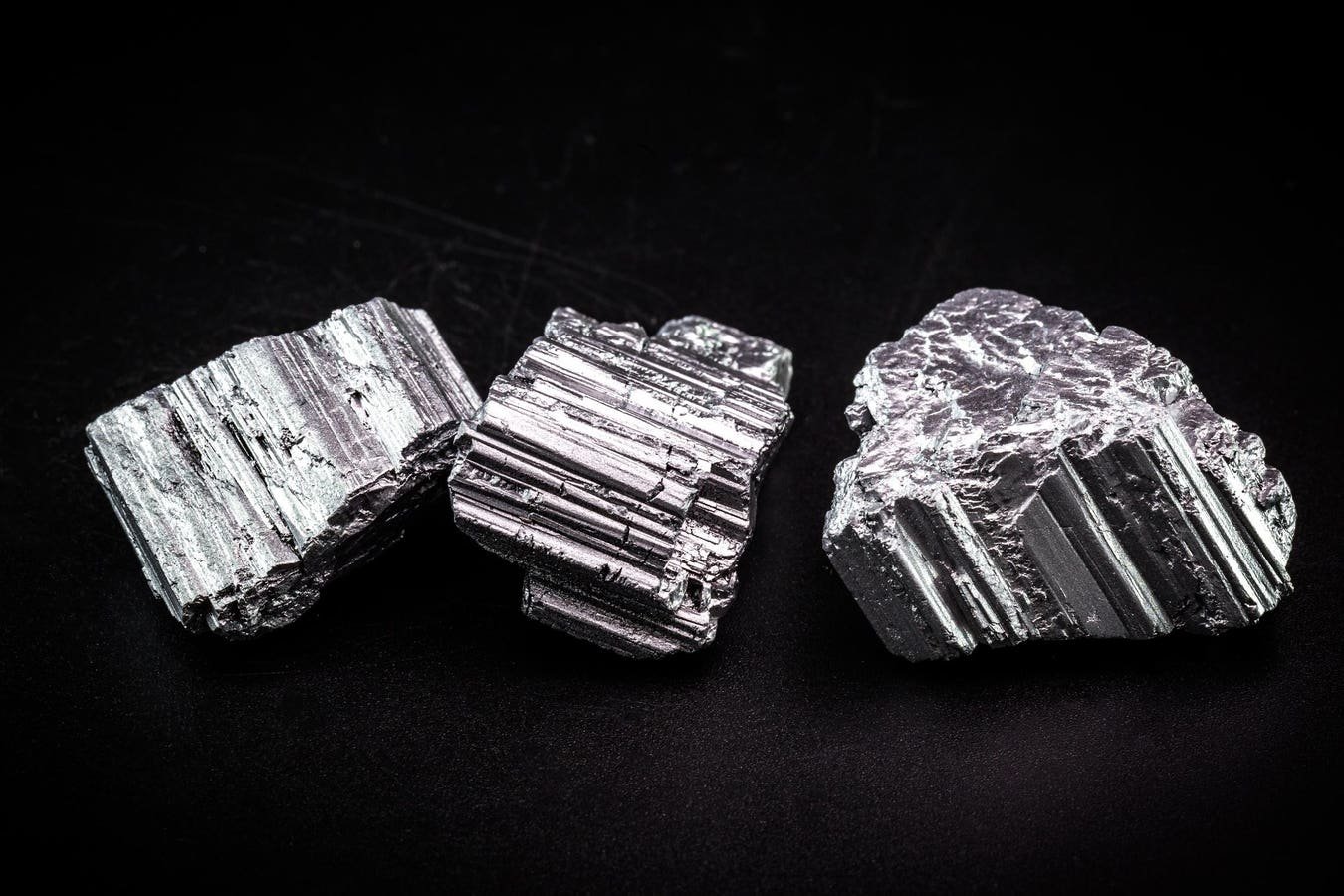
Neodymium is a magnetic chemical element belonging to the rare earth group used in magnets.
getty
The US government is offering companies $24 million to prototype and test projects that recover vital rare-earth minerals from scrap to turn into advanced magnets.
The grants are offered in the first part of the US Department of Energy’s Critical Minerals and Materials Accelerator funding notice. Applications are submitted until June 25.
Rare earth minerals for use in magnets have been identified as being of particular interest by the US government in collaborative industry projects to develop technologies in high impact areas.
The idea is to promote a domestic supply chain for critical minerals that advances national security while boosting American industry.
Building a domestic pipeline for rare earth magnet elements
Rare earth elements are essential in modern technology.
getty
The DOE explains in the funding offer that the grants are intended to create “a pipeline that will support the maturation of the technology to ultimately unlock private capital investment.”
The agency is particularly interested in promoting private industry support for the original recovery of the following critical minerals from secondary scrap sources.
These rare earth magnetic elements are:
- Neodymium,
- Praseodymium,
- Dysprosium and
- Terbium.
High strength magnets are made with neodymium and praseodymium. These can be found in wind turbines and electric vehicle engines.
Defense systems need magnets made with dysprosium and terbium to withstand high temperatures.
Other critical mineral projects sought in the initial grant offer include aluminum, cobalt, copper, electrical steel, gallium, germanium, nickel and silicon.
Extraction of rare earth elements from fragments
These rock trucks are on their way to drop a load of platinum-rich rock into the crusher. These trucks can carry more than 200 tons of rock at a time and are too big for public roads.
getty
These research and development grants also include demonstrating the viability of the projects. Rare earth magnetic elements must be recovered and produced from:
- Post-industrial scrap — i.e. from waste produced during the refining of other primary metal products or manufacturing components;
- Post-consumer scrap—especially electronic waste and electrical drive systems containing permanent magnet machines (motors or generators);
- Combinations of raw materials—such as tailings from mines (phosphoric acid mud, red bauxite mud) and tailings from metal mines (nickel, gold, copper and platinum).
The importance of critical minerals for rare earth magnets was described in a 2024 report to Congress that outlined their importance to Defense Department operations.
“They are often incorporated into components (eg, integrated circuits, electrical wiring, or optoelectronic devices) or structures (eg, aircraft fuselages or ship hulls) of numerous military platforms and weapons systems.” stated in the report.
“There are few and, in some cases, known alternatives to these materials, which often have unique physical properties (such as high material strength combined with corrosion resistance or low density).”
DOE expects to select between 10 and 14 projects. Individual grants of up to $2 million will be awarded.
Rare earth magnet fuels new jobs
A semiconductor manufacturing process.
getty
Texas Gov. Greg Abbott unveiled an MP Materials Corp. expansion project in February. to create a rare earth magnet manufacturing campus in Northlake. The $1.25 billion capital investment project is expected to add approximately 1,500 new jobs.
The state is providing a $53.4 million grant to enable the company to produce neodymium-iron-boron magnets that are critical semiconductor manufacturing components.
“We are advancing key goals in a public-private partnership with the Department of War and accelerating the independence of America’s rare earths and magnets with an uncompromising focus on speed, execution and delivery,” James Litinsky, founder, president and CEO of MP Materials, noted in a press release. issued from the governor’s office.
of North Carolina Johnston County has been selected by Vulcan Elements to expand its neodymium iron boron rare earth magnet production capacity. Gov. Josh Stein announced the venture last year.
“Along with semiconductors and batteries, rare-earth magnets are critical components for almost all technologies that use motors, sensors, generators or actuators – from hard drives, robotics and drones to satellites, submarines and almost every defense system.” famous the governor’s office.
The project is in progress is supported from a US Office of Strategic Capital joint $700 million loan commitment with Vulcan Elements and ReElement Technologies to strengthen the US supply chain for domestic magnet production.
In a related venture, United Rare Earths last year it licensed two technologies from DOE’s Oak Ridge National Laboratory. The technologies will be used in a new used magnet recycling and separation facility in Caryville, Tenn.
“These technologies support the creation of high-performance magnets designed to use significantly less rare earth content,” according to ORNL.
Jeffrey Willis, president of United Rare Earths, emphasized the importance of critical minerals to national security.
