




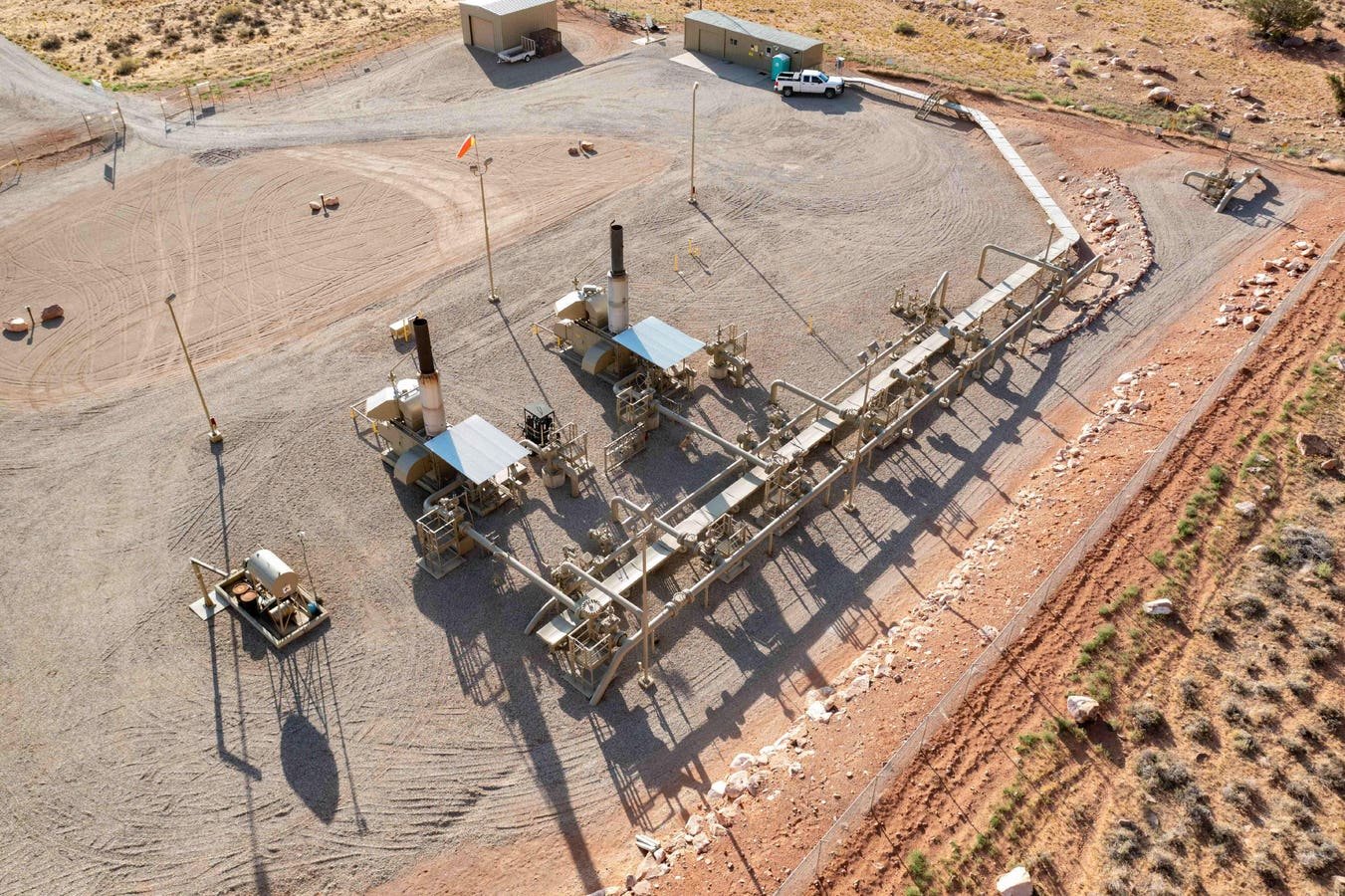
A small compressor station for a 12′ liquefied natural gas (LNG) pipeline in Spain Valley, near Moab, Utah. (Photo by Jon G. Fuller/VW Pics/Universal Images Group via Getty Images)
VW Pics/Universal Images Group via Getty Images
The turmoil of the Middle East once again reminds Americans of a harsh truth: energy security is economic security. When the Middle East trembles, Americans at home feel it at the gas pump, in their utility bills and throughout the broader economy.
The national average for a gallon of regular gas is about $4.50—a painful jump, even if it’s still lower than prices in many other countries. President Trump has assured Americans that prices will return to normal as the conflict in the Middle East subsides. History shows that it is possible. But the real lesson is bigger than a temporary price spike.
The US needs to produce more energy. Period. For too long, Washington has pursued what can only be described as an energy-abstraction policy: capping production, back-door licensing, throttling infrastructure and pretending that bureaucratic mandates could replace abundant supply. This approach does not reduce prices. grows them. It does not strengthen America. it weakens us.
The Trump administration wisely moved in the opposite direction. That means unlocking our vast energy resources, expanding production, building pipelines, approving infrastructure, and increasing exports to allies who need credible alternatives to hostile regimes.
Liquefied natural gas (LNG) is a prime example. In just its first decade as a major American industry, LNG has become a remarkable economic success story. It supports tens of thousands of jobs along the Gulf Coast and in nearly 40 states. It generates significant tax revenue for local communities. It has contributed nearly $500 billion to the American economy.
Equally important, LNG has become a pillar of US national security. During the conflict in Iran—and especially as LNG facilities in Qatar came under attack—US LNG helped keep energy flowing to allies abroad. This is what energy dominance looks like. It’s not a slogan. it is a strategic advantage.
Predictably, opponents of energy abundance continue to argue that LNG exports raise prices for American consumers. This argument has been refuted by a decade of factual evidence.
Energy prices are shaped by many factors: supply and demand, weather conditions, infrastructure constraints and geopolitical shocks. Temporary spikes can occur, especially during conflicts such as Russia’s invasion of Ukraine or unrest in the Middle East. However, the broader American story is a story of abundant, affordable natural gas.
Since the first US LNG cargo was exported a decade ago, US natural gas production has grown. LNG exports have increased by about 16 billion cubic feet per day since 2016, but domestic production has increased by about twice that amount. That’s why Americans continue to enjoy some of the lowest residential gas prices in the world.
LNG prices have remained stable, recently hovering near $2 despite geopolitical turmoil. Over the past decade, average prices have been more than 50% lower than before LNG exports began. This is not a rare record. It is a record of abundance. The lesson is simple: Markets work when government gets out of the way.
Those who really care about affordability should support more energy production in the US, not less. Burdensome “green” regulations, endless permitting delays and hostility to pipelines do not protect consumers. They impose costs on utilities, discourage investment and reduce supply. Inevitably, consumers foot the bill.
The international stakes are equally clear. The US is now the world’s largest exporter of LNG, giving Europe and other allies a vital alternative to Russian energy. If America withdraws, Russia and unstable Middle Eastern suppliers will gladly fill the gap. This would increase global energy risks and ultimately put upward pressure on prices here at home. Energy weakness causes economic pain and geopolitical risk. Abundant energy offers jobs, lower costs, stronger allies, and a safer America.
As the midterms approach, lawmakers in both parties should focus on policies that actually lower prices: expanding energy infrastructure, approving pipelines, streamlining permits, reducing unnecessary restrictions, and producing more energy at home while exporting more energy to our friends abroad.
The answer to volatile global energy markets is not to retreat from American energy leadership. is to double it. The US has the resources, the people and the technology to lead. What is needed now is the political will to do so.
