




Germany’s electric vehicle subsidy program launched on Tuesday with up to $7,000 available to purchase an EV or plug-in hybrid. The big winner will be China, although locals will now be able to rent a small, electric vehicle for less than $60 a month.
China, despite the European Union imposing import tariffs of up to 45.3%, still finds it easy to compete with its European competition, such is its superiority in manufacturing efficiency and battery technology.
Germany’s EV subsidies range from €1,500 ($1,700) to €6,000 ($6,965) for an EV or plug-in hybrid and are retroactive to January 1, 2026. The level of the subsidy depends on household income and the number of children in a household. There is no price cap and vehicles made outside the EU qualify, but households with incomes above €90,000 ($105,000) a year do not. Plug-in hybrids need a minimum range of 50 miles on electricity alone. German media estimates the budget will last 3 to 4 years, or around 800,000 vehicles.
According to Schmidt Automotive Research founder Matt Schmidt, this will lead to some impressive opportunities for German consumers. Volkswagenhis identity. The Polo, which starts at €24,955 after taxes ($28,970) could drop to €18,955 ($22,000) and BYD Dolphin Surf’s €18,990 ($22,000).
“The Leapmotor TO3 (listed at around 15,000 euros ($17,400) before subsidies) is available for just 50 euros ($58) a month, or roughly the equivalent of a standard monthly mobile phone bill, with subsidies covering the deposit,” Schmidt said.
Leapmotor is a Stellandis affiliate.
Unsurprisingly, this will boost EV and PHEV sales, according to investment bank UBS.
Subsidies and high gas prices
“Sales of electric vehicles in Germany (PHEVs and BEVs) are already up 32.9% year-to-date, and we see the trend potentially accelerating in the coming months given the combination of subsidies and high gasoline prices,” UBS said in a research note.
“German (manufacturers) are likely to be the biggest beneficiaries. (It will benefit) the mass market rather than the premium, due to the household income ceiling of 90,000 euros, but as there is no differentiation between (manufacturers), the Chinese could also take a significant share,” UBS said.
Germany is in a dilemma. Its major automakers such as Volkswagen and its subsidiaries Porsche and Audi, BMW and Mercedes have made huge profits in China for many years.
Volkswagen started selling in China in the mid-1980s and the rest followed. But in recent years the Chinese car industry is gradually learning the lessons from European and American manufacturers. German market share there is declining, while Chinese manufacturers are making serious inroads into Europe, led by EVs and PHEVs.
Juggling act
The Germans still have a valuable market in China, but if its government decides to curb Chinese sales in Europe, it could have dire consequences for the profits there of premium manufacturers such as Audi, Porsche, BMW and Mercedes.
Volkswagen ID. Polo (Photo by Michael Nguyen/NurPhoto via Getty Images)
NurPhoto via Getty Images
Schmidt said German Chancellor Friedrich Merz must perform a difficult juggling act to keep German industry in China on favorable terms while leaving the door open to Chinese businesses in Germany. German consumers have been reluctant to buy foreign sedans and SUVs, but that may be changing.
“The Chinese (manufacturers) have so far largely stayed out of the patriotically driven German market, but that could change as of this afternoon. German subsidies opened the door for Tesla half a decade ago, and it could risk the same happening again,” Schmidt said.
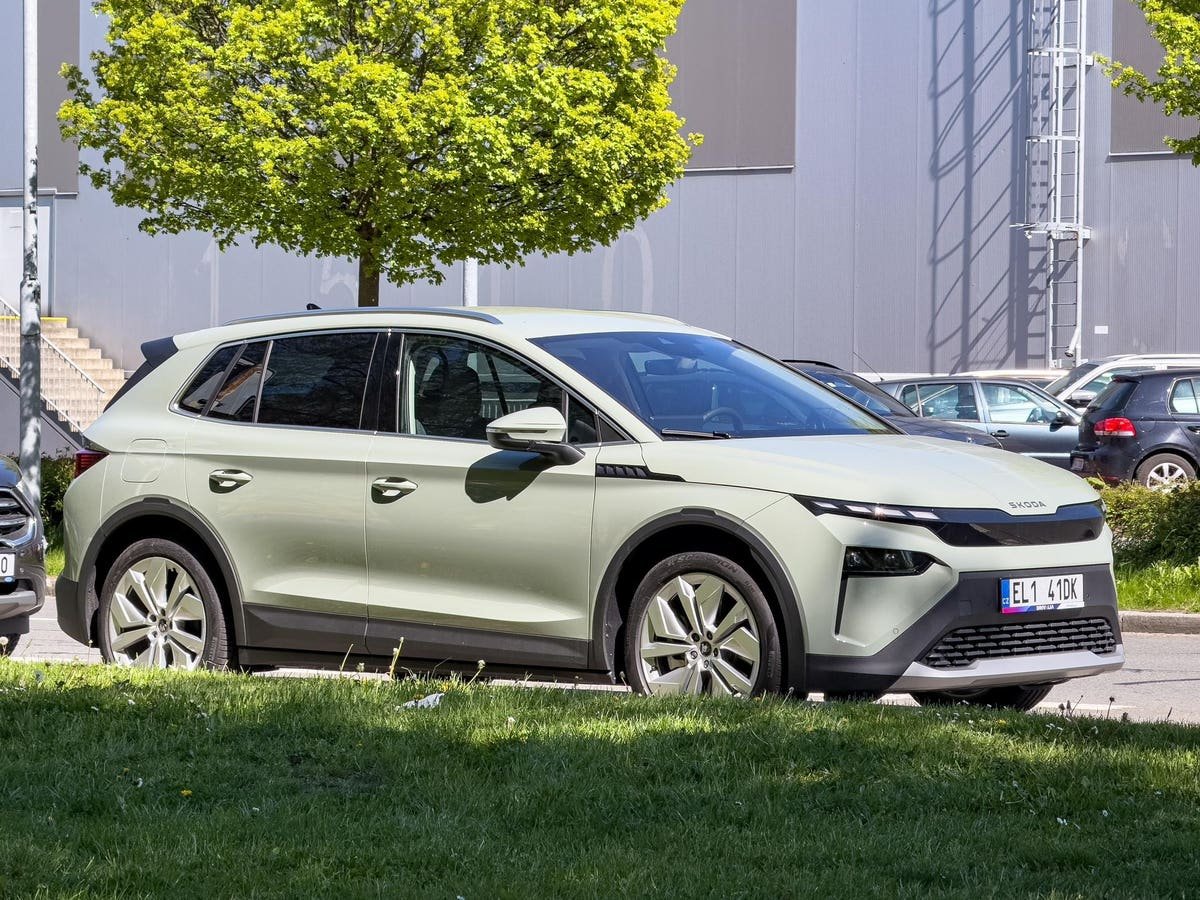
The German subsidy regime coincided with the launch of new EVs from local manufacturers, such as the VW ID. Polo and Skoda Elroq. Skoda is a subsidiary of VW.
“However, the timing fits well with VW’s new models coming to market, such as the ID. Priced under €25,000 ($29,000) before subsidies on the LFP base trim, the Polo will likely also be a beneficiary and help VW in its weak pricing position over the past 24 months as it has been forced to cut prices of BCO2-regulated models,” he said.
The EU has committed to reducing carbon dioxide emission levels, reducing by almost 100% by 2035.
France offers EV subsidies of up to €6,000 ($7,000), but excludes most Chinese sales. Italy has a subsidy package worth up to 11,000 euros ($12,800). Britain’s Zero Emission Vehicle Grant provides up to £3,750 ($5,000). Spain’s subsidies peak at 7,000 euros ($8,100).
