




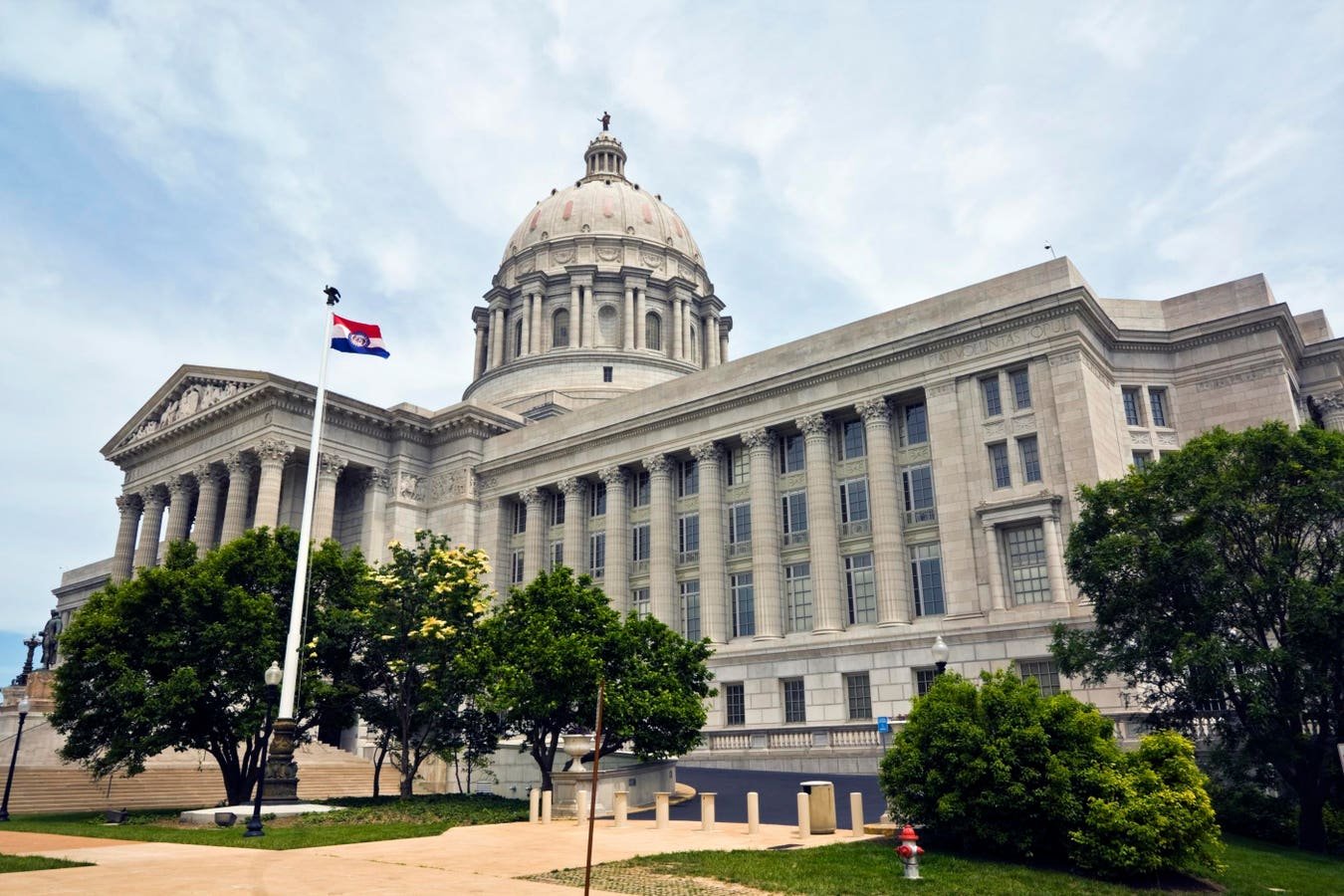
Missouri State Capitol in Jefferson City.
getty
Gov. Mike Kehoe signed into law the Missouri Uniform Public Expression Protection Act. THE UPEPA provides Missouri with the most modern Anti-SLAPP law to prevent abusive litigation that silences or retaliates against someone for exercising their free speech and related rights. Among others, journalists, online critics and critics and those who comment on government issues now have a higher level of protection against abusive litigation designed to appease or silence them.
Missouri’s prior Anti-SLAPP statute in Mo. Stat. § 537.528 was disappointingly limited. The primary problem was that the old statute’s protections were limited to speech made in connection with a government hearing and not broader First Amendment free speech and related rights.
Instead, UPEPA provides broad coverage for constitutionally protected speech and related rights except for the protection of speech in connection with a governmental process. Additionally, UPEPA offers the added benefit of uniformity of rulings (more or less) among all states that have adopted this law.
A long push to pass
The effort to get Missouri to pass UPEPA was a long one. In February 2023, I traveled to Jefferson City in miserable weather to meet with legislators and testify in favor of the law. Although there didn’t seem to be any real opposition to UPEPA, it limped from session to session until lawmakers finally passed it this year and the governor signed it into law. The hard work of all those associated with the efforts of the Uniform Law Commission in Missouri is to be warmly applauded.
Growing Domestic Adoption
15 states have adopted UPEPA (16 depending on how one categorizes Oregon) so far, making UPEPA by far the largest body of Anti-SLAPP law in the world. About 11 other states have Anti-SLAPP statutes that closely resemble UPEPA in their operation, meaning that 26 states now have outstanding Anti-SLAPP laws.
For those unfamiliar, UPEPA provides for a “special motion” that determines at the outset of the case whether particular causes of action are meritorious and can survive a motion for summary judgment. Once the special motion is made, the proceeding (including discovery) stops and only the special action is heard. Once the movant establishes that the cause of action falls within the scope of UPEPA protection, then the summary judgment standard essentially applies. If the person concerned loses the special treatment, then the person concerned has an immediate right to appeal the denial of the application and the suspension continues until the appeal is resolved. If the movant prevails, then mandatory attorney’s fees and costs will be assessed against the opposing party.
A powerful deterrent against abusive treatment
Not only does UPEPA resolve free speech and related issues more quickly, but it also provides a strong deterrent to those who might otherwise bring abusive litigation to freeze free speech or retaliate against those who have exercised their free speech.
Missourians now have these protections, too.
