




Artificial intelligence (AI) offers many opportunities to reshape healthcare delivery and access. In recent years, leaders across the healthcare industry have welcomed the boom in artificial intelligence and its promise to streamline administrative tasks and create efficiencies in provider workflows – ultimately empowering frontline clinicians to spend more time interacting with patients and delivering timely care.
This represents a huge advantage in employer-sponsored health care. Half the US population (160 million people) gets coverage through their workplace – and employers collectively invest $1 trillion in health care offerings to ensure their employees have reliable access to high-quality care.
But these investments have not translated into better care outcomes or an improved patient experience. Individual factors can lead to significant variations in both health care access and outcomes. At the same time, the average employer faces double-digit cost increases for their health benefits.
As American businesses grapple with rising costs and the need for more personalized, efficient care, AI-powered clinical solutions are emerging as key tools in the benefits arsenal. The development of artificial intelligence can lead to better clinical outcomes and ultimately improve the quality, affordability, and equity of employer-sponsored health care.
Here are five key opportunities:
- Clinical decision support for care with documentation: One of the most promising applications of artificial intelligence is clinical decision support. By analyzing patient histories, the latest medical literature, and results from similar cases, AI can recommend evidence-based treatment protocols tailored to individual needs. Not only does this help clinicians make more informed decisions, it can also ensure that workers are receiving care that’s proven to work – reducing unnecessary procedures and improving recovery rates. Tools like Embold’s virtual assistant use artificial intelligence to review clinical data and directly connect patients with high-performing providers to access the best possible care. Just as importantly, it meets patients where they are – and connects with them on their preferred channel.
- Triage patients for optimized care delivery: AI patient triage systems can transform how health systems prioritize care. By assessing the criticality of patient presentations in real-time, these tools can help direct resources where they are needed most and ensure that urgent cases receive prompt attention while routine issues are handled efficiently. For employers, this means their workforce can receive timely care, minimizing downtime and supporting productivity. Cortica, a leader in autism and neurodegenerative care, leverages this approach speed up the process of initial diagnosis and reduce delays in treatment (which remains a key barrier for patients and their families today).
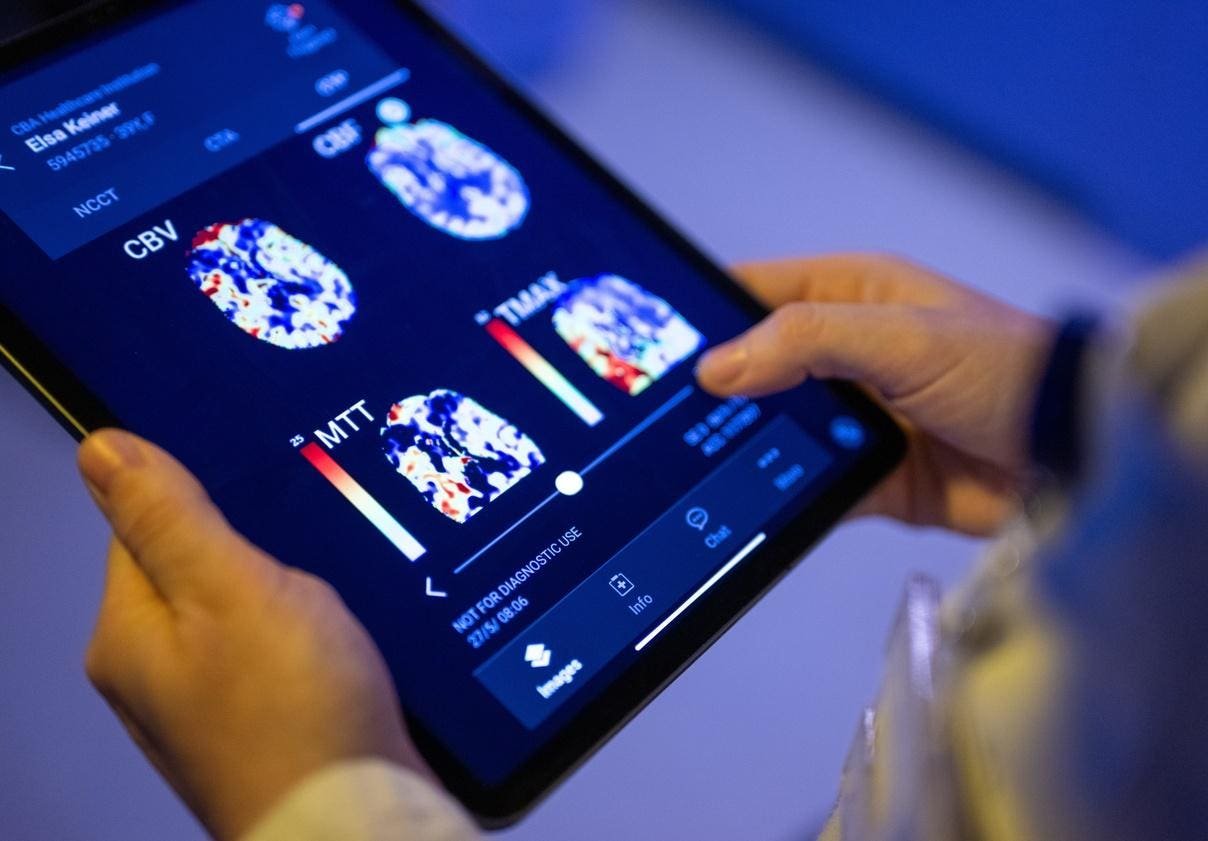
- Accuracy Diagnosis and Monitoring: Computer vision technologies are now being applied to medical imaging, enabling faster and more accurate diagnoses. Artificial intelligence can detect subtle variations in X-rays, MRIs and other scans to support even the most experienced radiologists. This capability not only speeds up diagnosis, but also helps with treatment planning and disease monitoring, ensuring workers are on the right path to recovery and reducing the risk of missed or late diagnosis. Merative’s Merge Imaging Suite combines artificial intelligence with data expertise to help clinicians improve their workflow and diagnose with confidence.
- Risk Prediction and Preventive Intervention: Artificial intelligence can effectively identify people at high risk for adverse health outcomes. By analyzing massive data sets, these solutions can flag employees who can benefit from early interventions – whether it’s chronic disease management, screenings or targeted wellness programs. In the long term, this can help employers manage population health more effectively – reducing costly hospitalizations and improving overall well-being. As an example, the health of apree uses machine learning and advanced algorithms to analyze over 220 million medical and pharmaceutical claims to identify future cost and utilization trends.
- Tailoring Care to the Employee: Perhaps the most exciting frontier is personalized therapy. AI can synthesize disparate health histories and real-time data to develop patient-specific protocols, moving beyond one-size-fits-all medicine. Employees can receive care that reflects their unique needs, preferences and risks. In turn, this can lead to better engagement, improved results and higher satisfaction. This is an increasingly important achievement for serious health issues like cancer, where patients have historically struggled with fragmented care and a patchwork of solutions. Thyme Care, a leader in value-based oncology care, develops AI to seamlessly guide patients throughout their cancer journey – from personalized treatment plans to clinical trial matching.
June 19, 2023, Berlin: A radiologist at the Unfallkrankenhaus Berlin examines images of a patient’s brain in an AI-based application on a tablet. In order to care for stroke patients in acute situations even faster in the future, the Unfallkrankenhaus Berlin wants to expand the use of artificial intelligence (AI). (to dpa: “Unfallkrankenhaus wants to improve patient care through AI”) Photo: Monika Skolimowska/dpa (Photo by Monika Skolimowska/image alliance via Getty Images)
dpa/picture alliance via Getty Images
As AI continues to evolve, its integration into employer-sponsored healthcare will deepen. The challenge for benefit leaders is how to harness these technologies responsibly – ensuring data privacy, transparency and equity – while embracing the potential for smarter, more personalized care. The potential payoff is clear: healthier workers, lower costs, and a more resilient provider workforce.
