




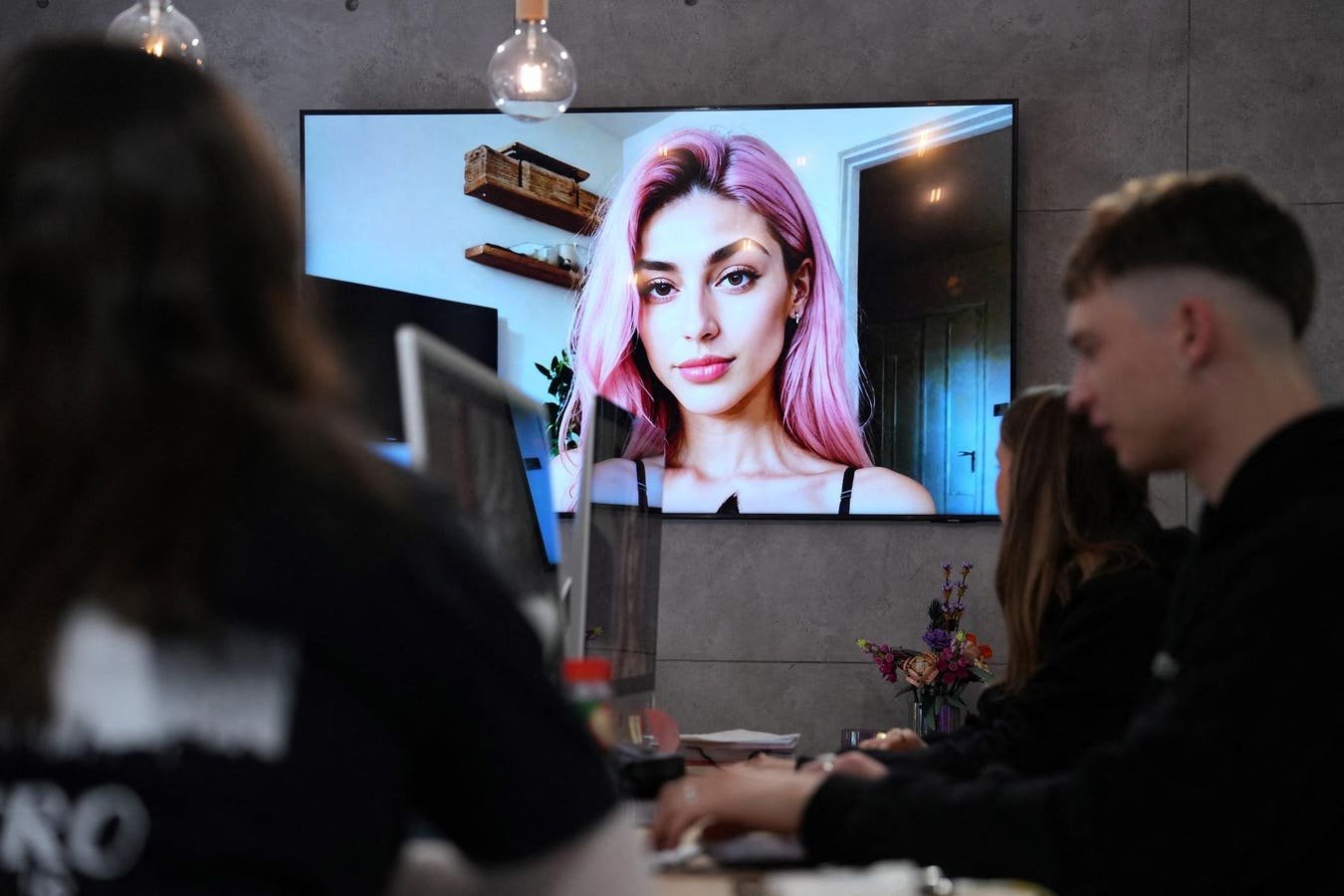
Fashion influencer Aitana is not a real person, but an image generated by AI and a new rival … [+]
The fashion industry is in a paradox. On the one hand, it embraces cutting-edge technology, from digital fabric printing to virtual try-on experiences. Generative AI is the latest entrant, with companies like Mango using it to design campaigns and possibly even the clothes themselves. However, a dark reality persists: a significant portion of the world’s clothing is still painstakingly sewn by hand, often under miserable working conditions that would not be tolerated in a robot-powered factory.
This irony highlights a deeper issue: the fashion industry is a colossal generator of waste. Recent estimates show that the industry produces about 20% of global wastewater and 10% of global carbon emissions. It is estimated that a staggering 85% of textile products end up in landfills, much of which is never worn. We’ve all seen the Textile Mountains in the Atacama Desert in Chile. It is clear that the current system is not sustainable.
Chile’s Atacama Desert: Graveyard for Used Clothes Photo: Antonio Cossio/dpa (Photo by Antonio … [+]
Further complicating the image is the fashion industry’s involvement with body image issues. For decades, it has perpetuated unrealistic beauty standards, mostly for women but increasingly for men as well. Photoshopped photos in magazines and heavily edited social media feeds present a distorted view of reality, creating a fertile ground for body dysmorphia, particularly among teenagers and young adults. This raises a critical question: can artificial intelligence, a technology capable of producing flawless, potentially even unachievable graphics, exacerbate this problem?
The question is, can artificial intelligence be part of the solution, or is a more fundamental transformation needed in our endless consumer system? The answer probably lies somewhere in between. Leading fashion houses have already adopted AI for various applications to reduce their impact. Luxury brands like Burberry use artificial intelligence to predict trends and optimize inventory and minimize waste. Fast fashion giants like it H&M are exploring AI personalization tools to recommend styles to customers before purchase. These examples are just the beginning of an exhibition of possible applications of artificial intelligence to streamline processes, reduce waste and meet individual preferences.
The true impact of AI on fashion may extend far beyond aesthetics and marketing. The industry urgently needs solutions to address the colossal problem of waste, overstocking and unethical labor practices. Technology is a powerful tool, but it should never be used as a distraction. While AI-generated visuals can have unintended consequences, particularly in terms of unrealistic beauty standards, the technology itself has enormous potential for positive change.
Marks & Spencer launched its latest ‘BraFit’ campaign in February, encouraging women to embrace their bodies … [+]
Fortunately, innovation is already underway in critical areas such as robotics, clean materials and circularity in the textile industry. Imagine automated factories powered by renewable energy, creating clothes made with revolutionary, sustainable fabrics developed through AI-powered materials science. 3D printing is poised to revolutionize personalized, on-demand manufacturing. This could eliminate the need for excess inventory and dramatically reduce waste in the long and often fragile supply chain.
Here’s a glimpse into the future: Imagine choosing clothes in a virtual reality environment. Using LiDAR technology from your phone, you can have an accurate, custom fit before you order your garment. Production could then take place in a local, collaborative workshop using a combination of human expertise and robotic efficiency. This lab could even use recycled clothing and fabrics as raw materials. While this scenario may seem futuristic, elements of it are already happening, with developments gradually flowing into the retail market.
AI-generated ads are on the rise and need an ethical framework to ensure they are not perpetuated … [+]
The challenge for the fashion industry is to move beyond the hype of AI-generated ads and delve into the transformative potential of the technology. This vision highlights the transformative potential of artificial intelligence in fashion. It’s not just about creating stunning graphics. it’s about harnessing technology to build a more responsible, sustainable and ethical industry. Here’s what it takes to advance the status quo:
Instead of chasing cheap labor, fashion giants should invest in AI-powered robotic manufacturing that prioritizes worker safety and environmental sustainability. Innovation doesn’t have to stop at materials, artificial intelligence can be used to design garments with inherent durability and repairability, extending their lifespan and reducing waste.
The future of fashion can’t just be about further AI models on billboards. It’s about harnessing technology to create a more responsible, ethical and sustainable industry. The paradigm is changing, and I am optimistic. Let’s weave a fashion future that is both beautiful and responsible. Can artificial intelligence fix a worn-out fashion industry? The future of fashion may depend on it.
