


EconLearnerEconLearner
  • Business Insight
    • Data Analytics
    • Entrepreneurship
    • Personal Finance
    • Innovation
    • Marketing
    • Operations
    • Organizations
    • Strategy
  • Leadership & Careers
    • Careers
    • Leadership
    • Social Impact
  • Policy & The Economy
    • Economics
    • Healthcare
    • Policy
    • Politics & Elections
  • Podcast & More
    • Podcasts
    • E-Books
    • Newsletter
What's Hot

Why Some Billionaires Are Planning Exits

January 20, 2026

4 reasons why remote work isn’t for you, from a psychologist

January 19, 2026

Girlfriend’s Debt Will Take 26 YEARS To Pay Off

January 19, 2026
Facebook X (Twitter) Instagram
EconLearnerEconLearner
  • Business Insight
    • Data Analytics
    • Entrepreneurship
    • Personal Finance
    • Innovation
    • Marketing
    • Operations
    • Organizations
    • Strategy
  • Leadership & Careers
    • Careers
    • Leadership
    • Social Impact
  • Policy & The Economy
    • Economics
    • Healthcare
    • Policy
    • Politics & Elections
  • Podcast & More
    • Podcasts
    • E-Books
    • Newsletter
EconLearnerEconLearner
Home » The Dangerous Contradiction in Superior Federal Deposit Insurance
Policy

The Dangerous Contradiction in Superior Federal Deposit Insurance

EconLearnerBy EconLearnerDecember 2, 2025No Comments3 Mins Read
The Dangerous Contradiction In Superior Federal Deposit Insurance
Share
Facebook Twitter LinkedIn Pinterest Email

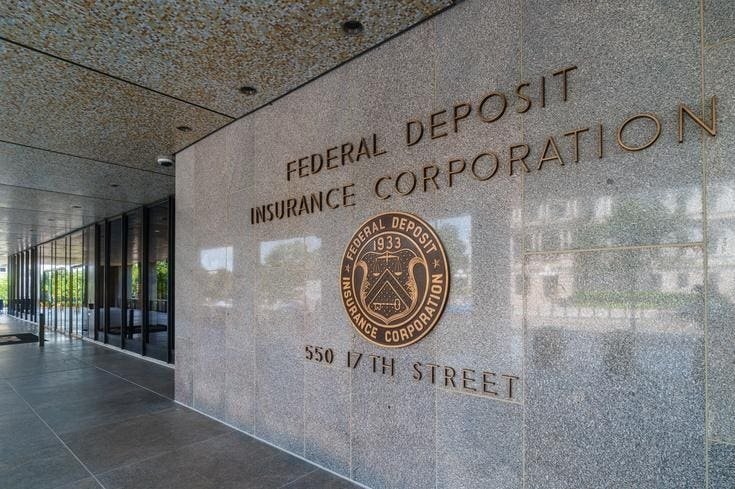
WASHINGTON, DC – AUGUST 18: Entrance to the Federal Deposit Insurance Corporation (FDIC) is seen on August 18, 2024, in Washington, DC. (Photo by J. David Ake/Getty Images)

Getty Images

Greater federal deposit insurance would weaken banks, bank depositors, and the broader US economy. Say what is true repeatedly.

To see the obvious contradiction in legislation that means increasing deposit insurance from $250,000 per account to $10 million per account, just look a little deeper into the details. Insurance is for interest free accounts.

Bank accounts that do not pay interest speak strongly about the wishes of the holders of these accounts. These are generally checking accounts. Current account owners want little to no risk. Call it non-interest bearing accounts: saving money for everyday spending needs, debit cards or just paying bills.

By extension, banks understandably take the wishes of interest-free account holders very seriously. Money should not be put at great or even small long-term or short-term risk precisely because it is expected to be easily accessible without penalty as a consequence of not paying interest on the funds.

It speaks to the almost complete inconsistency of proposed federal legislation aimed at increasing federal deposit insurance. The legislation implies that money placed in a checking account for day-to-day transactions is money that banks put at risk. No, not at all. Which once again explains the lack of interest. Think of it with significantly expanded FDIC insurance in mind.

Suddenly funds stored in banks for everyday use and not at risk for that very reason would be federally insured as if they were. There are costs associated with such insurance. And as already mentioned, the banks will bear those costs by paying billions more into the FDIC insurance fund.

It means that banks will suffer twice: firstly from higher insurance costs and secondly from a reduction in profitable lending. From this, readers can infer hope that an unnecessary cost imposed on banks will be paid for through reduced economic activity thanks to lending shrunk by federally mandated insurance cost increases.

Going back to bank depositors, assuming they won’t pay for increased deposit insurance is really naive. This is because FDIC insurance increased interest free The accounts will logically increase the cost for banks to host these accounts in the first place. Translation, the fees associated with interest-free accounts will almost certainly increase to reflect the cost of insurance for accounts that, because they don’t pay interest, don’t require much insurance to begin with. The average household checking balance is $5,300.

Which brings us back to the legislation itself. To say it’s a solution in search of a problem is an understatement. Except it’s much worse. Since increased deposit insurance will increase costs for both banks and bank customers, it will hurt both while reducing economic vitality by reducing the availability of money for an economy that depends on it.

Contradiction Dangerous deposit Federal insurance Superior
nguyenthomas2708
EconLearner
  • Website

Related Posts

Why Some Billionaires Are Planning Exits

January 20, 2026

7th Day of New York Nurses’ Strike Highlights Continuing Health Care Problems

January 19, 2026

Why is Donald Trump the only villain in the Jerome Powell investigation?

January 19, 2026

100% bonus payback is back—See what businesses need to know

January 18, 2026
Add A Comment

Leave A Reply Cancel Reply

Personal Finance

How to Replace a 6-Figure Job You Hate With a Life That You Love

February 10, 2024

How To Build An Investment Portfolio For Retirement

February 10, 2024

What you thought you knew is hurting your money

December 6, 2023

What qualifies as an eligible HSA expense?

December 6, 2023
Latest Posts

Why Some Billionaires Are Planning Exits

January 20, 2026

4 reasons why remote work isn’t for you, from a psychologist

January 19, 2026

Girlfriend’s Debt Will Take 26 YEARS To Pay Off

January 19, 2026

Subscribe to Updates

Stay in the loop and never miss a beat!

At EconLearner, we're dedicated to equipping high school students with the fundamental knowledge they need to understand the intricacies of the economy, finance, and business. Our platform serves as a comprehensive resource, offering insightful articles, valuable content, and engaging podcasts aimed at demystifying the complex world of finance.

Facebook X (Twitter) Instagram Pinterest YouTube
Quick Links
  • About Us
  • Contact Us
  • Privacy Policy
  • Terms and Conditions
  • Disclaimer
Main Categories
  • Business Insight
  • Leadership & Careers
  • Policy & The Economy
  • Podcast & More

Subscribe to Updates

Stay in the loop and never miss a beat!

© 2026 EconLeaners. All Rights Reserved

Type above and press Enter to search. Press Esc to cancel.