




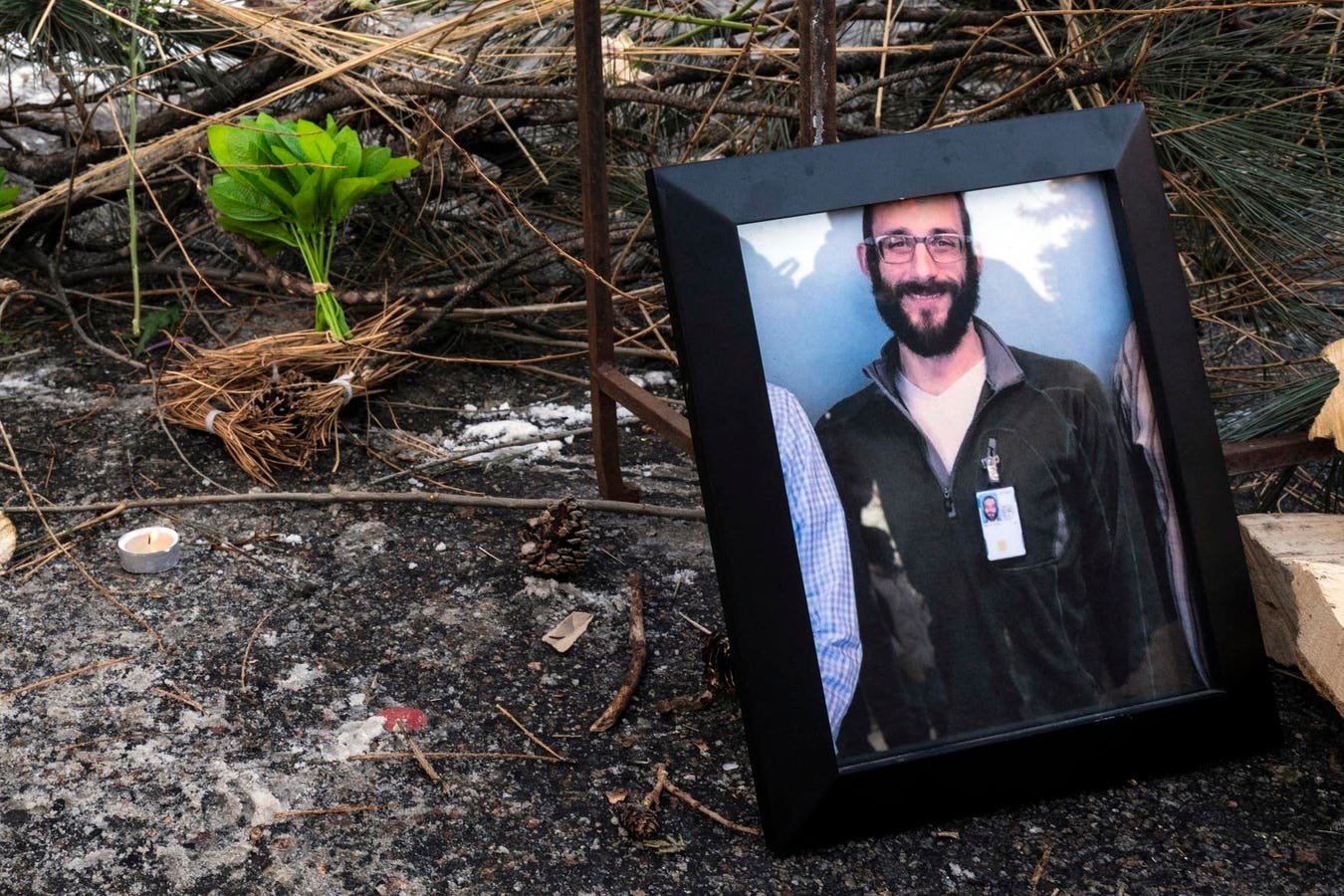
A photo of 37-year-old Alex Pretti can be seen at a makeshift memorial in the area where he was killed by federal immigration agents earlier in the day in Minneapolis, Minnesota, on January 24, 2026. The death came less than three weeks after U.S. citizen Renee Good was shot and killed by an ICE officer. (Photo by ROBERTO SCHMIDT/AFP via Getty Images)
AFP via Getty Images
The fatal shooting of Alex Pretti, an intensive care nurse who was shot multiple times by masked ICE agents in Minneapolis, has intensified scrutiny of the Trump administration’s immigration enforcement strategy. Video reviewed by The Wall Street Journal appears to contradict official claims that Pretti was an imminent threat at the time deadly force was used, raising new questions about the conduct and responsibility of federal agents in domestic enforcement operations.
Civil liberties groups immediately responded to news of the shooting. The ACLU of Minnesota doomed the killing and requested a suspension of ICE operations pending an independent investigation. “Yesterday, tens of thousands of Minnesotans from all walks of life took to the streets, and today we wake up to the heartbreaking news that federal officials have killed another person,” said Deepinder Mayell, executive director of the ACLU of Minnesota. “This tragedy is further proof that these federal agents are out of control and are putting our communities at critical risk.”
A framed portrait of Renee Nicole Good is displayed on a chain outside an immigration detention facility on January 9, 2026, in Broadview, Illinois. Protesters gathered to protest US Immigration and Customs Enforcement (ICE) operations and show solidarity with activists in Minneapolis. (Photo by Jacek Boczarski/Anadolu via Getty Images)
Anadolu via Getty Images
Turning point after Renee Good
Public resistance to aggressive immigration enforcement did not begin with Pretti’s death. But the fatal shooting of Renee Good earlier this year marked a turning point in Minnesota. After that incident, protests in Minneapolis expanded dramatically, with tens of thousands participating despite sub-zero temperatures, according to a Reuters report.
Rather than deescalate, federal authorities increased their armed presence in residential neighborhoods. Civil rights advocates say the response hardened opposition and turned a local dispute into a broader debate about the limits of federal enforcement power. The ACLU and its partners have since filed numerous lawsuits alleging warrantless arrests, racial profiling and retaliation against protesters and legal observers.
Polls signal a shift
Polling data shows that the political impact is now measurable. Pew Research Center investigations show that a majority of Americans oppose many key ICE tactics, including workplace raids and expanded enforcement authority. Republicans remain more supportive than Democrats or independents, but overall approval has declined. Gallup’s trend data points in the same direction. Support for reducing immigration — once a near-consensus position among Republican voters — has plummeted since mid-2024, suggesting a waning of tension behind hardline positions.
Corporate America Steps In
The backlash extended to corporate leadership. Major Twin Cities employers, including Target, 3M, Medtronic, US Bancorp and UnitedHealth, were forced into internal crisis management as enforcement actions disrupted workplaces and, in some cases, involved US citizens. “Businesses don’t need to weigh in on politics,” said Richard Edelman, managing director of public relations firm Edelman. “However, when there’s a major incident in a city, you have to engage with your people so they know you’re part of the community.”
Global confidence is eroding
International concern over domestic American strife is also a growing concern. Report from Financial Times in discussions at the World Economic Forum in Davos highlights concern among political and business leaders about US institutional stability, adherence to the rule of law and executive unpredictability.
Election year and dangerous rhetoric
President Trump has publicly floated the idea of delaying or canceling the election, according to observations Time and was confirmed by Reuters, before later being retracted by them. The timing of such comments heightens the stakes. Legal scholars note that a president does not have the constitutional authority to cancel a federal election. Even so, the comments heightened concerns about democratic rules during a period of intense turmoil.
Minnesota Governor Tim Walsh has spoken out against ICE actions in his home state. (Photo by Anna Moneymaker/Getty Images)
Getty Images
Minnesota Governor Tim Walsh issued a direct warning as tensions escalated over the issue. “Don’t allow them to invoke riot law. Don’t allow them to declare martial law. Don’t allow them to lie about the safety and dignity of this state,” Walz said. Meanwhile, the Brennan Center for Justice has similar warned that the Sedition Act is dangerously broad and prone to abuse, particularly in times of political instability.
Courts and the limits of executive power
The Supreme Court is considering executive branch challenges to the tariffs that could clarify how far presidents can go in exercising emergency powers without express approval from Congress. The impact of the court overturning the tariffs imposed by the Trump administration will affect America’s political trajectory and its democracy. This in turn could affect the President’s ability to implement the immigration enforcement agenda.
From assets to liabilities
Immigration enforcement was once a defining pillar of Trump’s political identity. It mobilized voters, united donors and projected power. Today, images from Minneapolis—deadly encounters, mass protests, corporate unrest and widening legal challenges—suggest a reversal. In short, what once fueled Trump’s rise to power is increasingly exposing the dangers of his administration through escalation. Immigration policy, long viewed as a blunt political tool, is now emerging as the focus of public resistance, judicial scrutiny and declining trust — raising questions about whether the strategy that once gave Trump political credibility is now accelerating his political vulnerability.
