




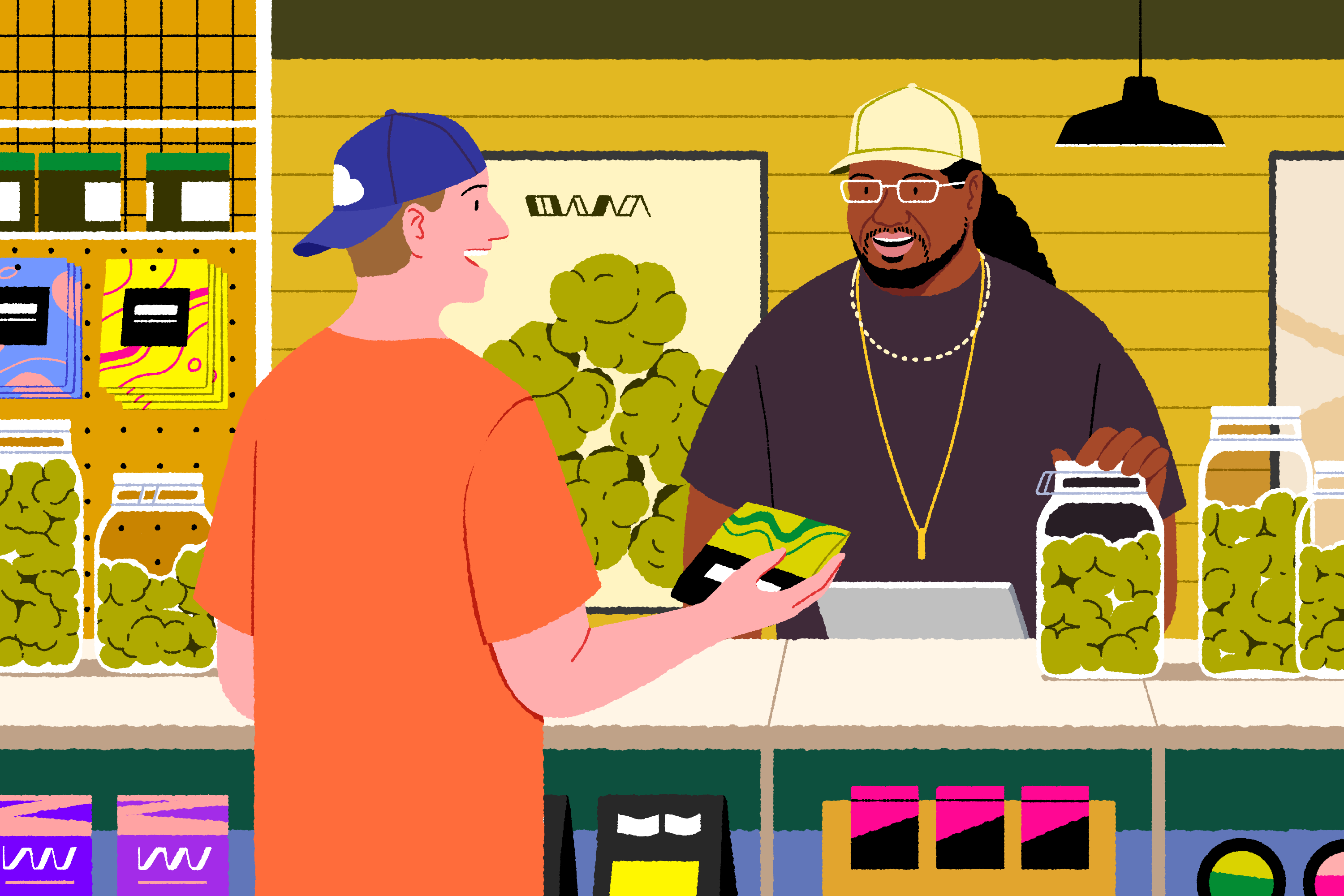
Recovered from the original publisher: Kellogg Insight
“When those drugs became legal, it was a huge revenue opportunity,” says Chethana Achar, a Kellogg associate professor of marketing. But there have been questions about who should get access to that opportunity, given “the drug space has a very complex sociopolitical history.”
People from underrepresented communities in the U.S., for example, were disproportionately criminalized for the use and sale of cannabis and psychedelics before they were legalized. Policymakers in many states developed equity initiatives “to give these affected communities the chance to be part of the commercialization process early on by prioritizing licenses for underrepresented business owners,” Achar says.
Though the policies created more opportunities for entrepreneurs from these affected communities, particularly Black business owners, there remained questions about the effectiveness of these initiatives in the legalized drug market. Specifically, would consumers be drawn to drug products produced or sold by entrepreneurs from these communities?
To address that question, Achar, Keyaira Lock, a Kellogg MBA alumna and consultant to legalized-drug businesses, and Nidhi Agrawal of the University of Washington conducted a series of studies to determine if consumers were more or less likely to purchase legalized drugs explicitly labeled as coming from a Black-owned business.
“Most of the research on how ownership labeling affects consumer responses has been done on socially safe products like shoes and makeup,” Achar says. That research generally shows that businesses owned by Black and other historically underrepresented groups receive more support from members of those same groups than they do from other groups. Drugs, however, have more physical risk and stigma attached to them than many other products, and consumers’ responses to drug products may deviate from their responses to socially “safe” products.
Overall, the researchers found that Black ownership of cannabis and psychedelics businesses would be received favorably by consumers—in large part because of the stereotype that associates the Black community with expertise in drug-related products.
“This is one of the few cases where it appears that social stereotypes have positive market effects,” Achar says.
Mapping ownership perception
For the most part, how consumers perceive ownership labels has been largely predictable. People generally support products or services that are managed by a group that matches their own. “If it’s a woman-owned cafe, women are more likely to support it,” Achar says. “If it’s a Black-owned restaurant, Black people are more likely than others to support it.”
But support from the ingroup may break down when there are negative associations between a specific product and group of people, as might be the case between Black communities and some recently legalized drugs. “People don’t want to perpetuate a negative stereotype,” Achar says.