











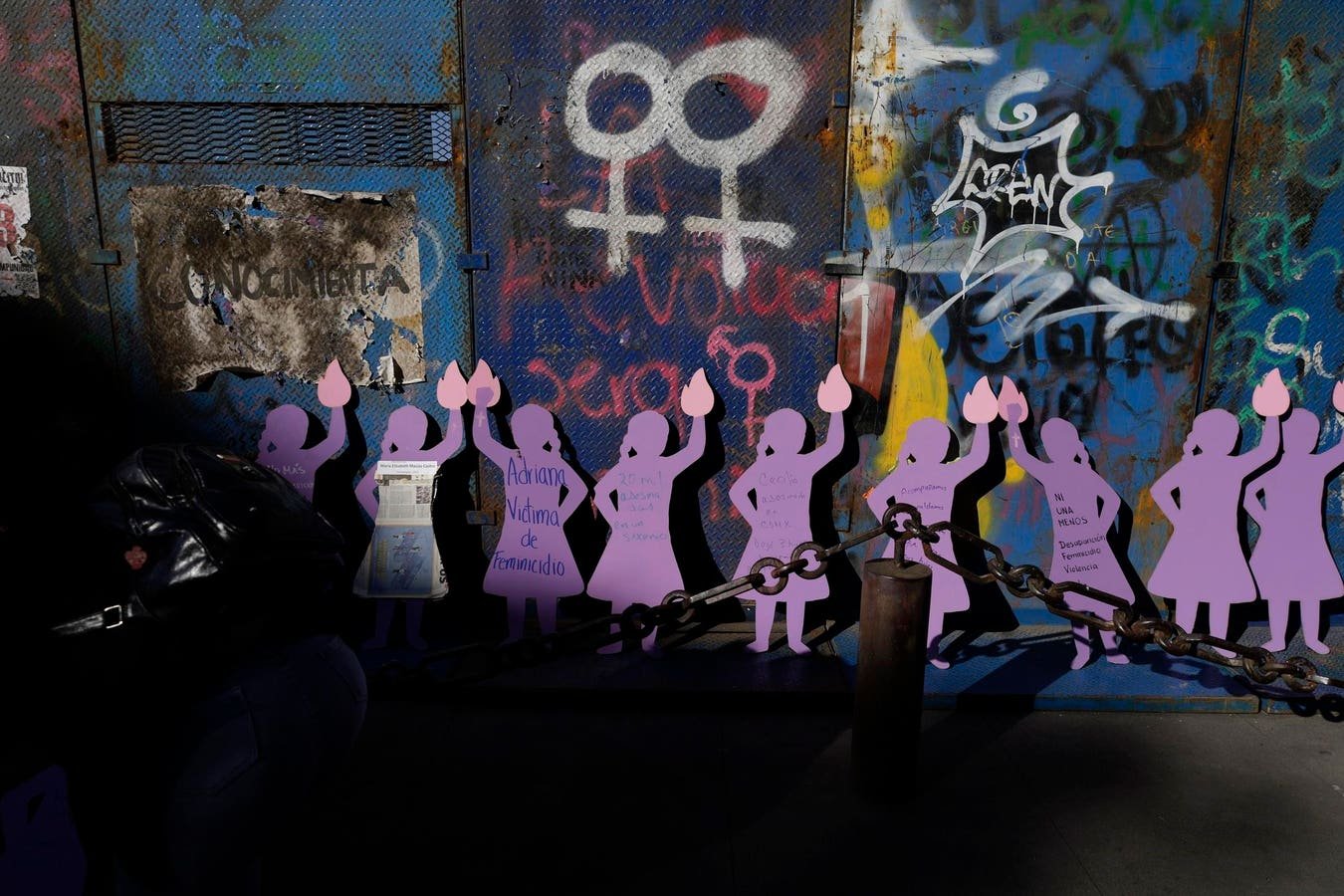
Silhouettes placed by mothers, relatives of missing persons and victims of femicide, feminist collectives and various organizations are seen as they protest in various streets of Mexico City, Mexico, on November 25, 2024, on the occasion of the International Day for the Elimination of Violence against Women, which aims to prevent and eliminate violence against women and girls around the world. (Photo: Gerardo Vieyra/NurPhoto via Getty Images)
NurPhoto via Getty Images
November 25 marks the International Day for the Elimination of Violence against Womena UN day set aside to focus on the issue of violence against women and girls and call for increasingly effective action to combat it. Over time, the day has grown into a global, widespread initiative that is now mainstreamed 16 Days of Activism and the Join campaigns. The 2025 theme for this UN Day focuses on the issue of digital violence.
As the UN emphasizes, violence against women and girls remains one of the most widespread and pervasive human rights violations in the world. Globally, nearly one in three women have experienced physical and/or sexual violence by an intimate partner, sexual violence by a non-partner, or both, at least once in their lifetime. The online world also poses various threats to women.
Indeed, digital tools are increasingly being used to abuse women and girls, including image-based abuse/non-consensual sharing of intimate images (so-called revenge porn), cyber-bullying, trolling, cyber-threats, cyber-harassment, artificial intelligence such as sexually explicit pornographic videos, digital and doxxing videos (publication of personal information), online stalking or tracking, online grooming and sexual exploitation and more. These acts, while occurring online, often lead to offline violence, including coercion, physical abuse, and even femicide. Digital violence targets women more than men, and particularly those with public or online visibility – such as activists, journalists, women in politics, human rights defenders and young women.
According to data collected by various UN agencies:
As the UN pointed out, “Violence against women on online platforms is, today, a serious and rapidly growing threat that seeks to silence the voices of many women — especially those with a strong public and digital presence in fields such as politics, activism or journalism.” This form of violence is said to be on the rise. This is due to several factors, including “weak technological regulation, lack of legal recognition of this type of aggression in some countries, impunity on digital platforms, new and rapidly evolving forms of abuse using AI, anti-gender movements, the anonymity of perpetrators and limited support for digital victims.”
In 2025, the UNiTE campaign to end digital violence against women and girls aims to mobilize all members of society to address online violence against women and girls. Among other things, governments must end impunity through stronger laws, including laws that criminalize such violence, including the production and sharing of digitally manipulated images or videos, and strengthen the capabilities of law enforcement agencies to effectively investigate and prosecute such crimes. As it stands, less than 40% of countries have laws that protect women from cyber-harassment or cyber-stalking. This goes away 44% of the world’s women and girls – 1.8 billion – do not have access to legal protection. States could also strengthen accountability by implementing positive obligations for technology intermediaries to proactively identify harmful content and provide a safe and respectful online environment. In addition, tech companies must do more to address such violence. Among other things, they need to develop strong policies and standards to guide responses to such violence, including strengthening content moderation policies, codes of conduct and responses to reports. However, there is also a role for every internet and social media user. It starts with understanding that virtual abuse is real and has a real impact on victims/survivors.


