




When we talk about our changing climate, many start by focusing on carbon emissions from cars, factories and power plants. But another notable contributor to global warming is hiding in plain sight: the beef on our plates. As the 30th United Nations Climate Change Conference, COP30, approaches in Brazil, global attention is once again turning to bold climate solutions. And one of the most transformative opportunities lies in the host country’s own agribusiness sector.
Brazilian beef is responsible for nearly 25% of total tropical habitat loss every year. As global demand for beef grows, so does pressure to convert native forests—especially in the Amazon—into pasture. This deforestation threatens one of the most biodiverse ecosystems on Earth. It also releases massive planet-warming emissions into the atmosphere, endangering not only our precarious climate, but also Brazil’s agricultural productivity and global food security.
But there is hope – and it comes from Brazil itself.
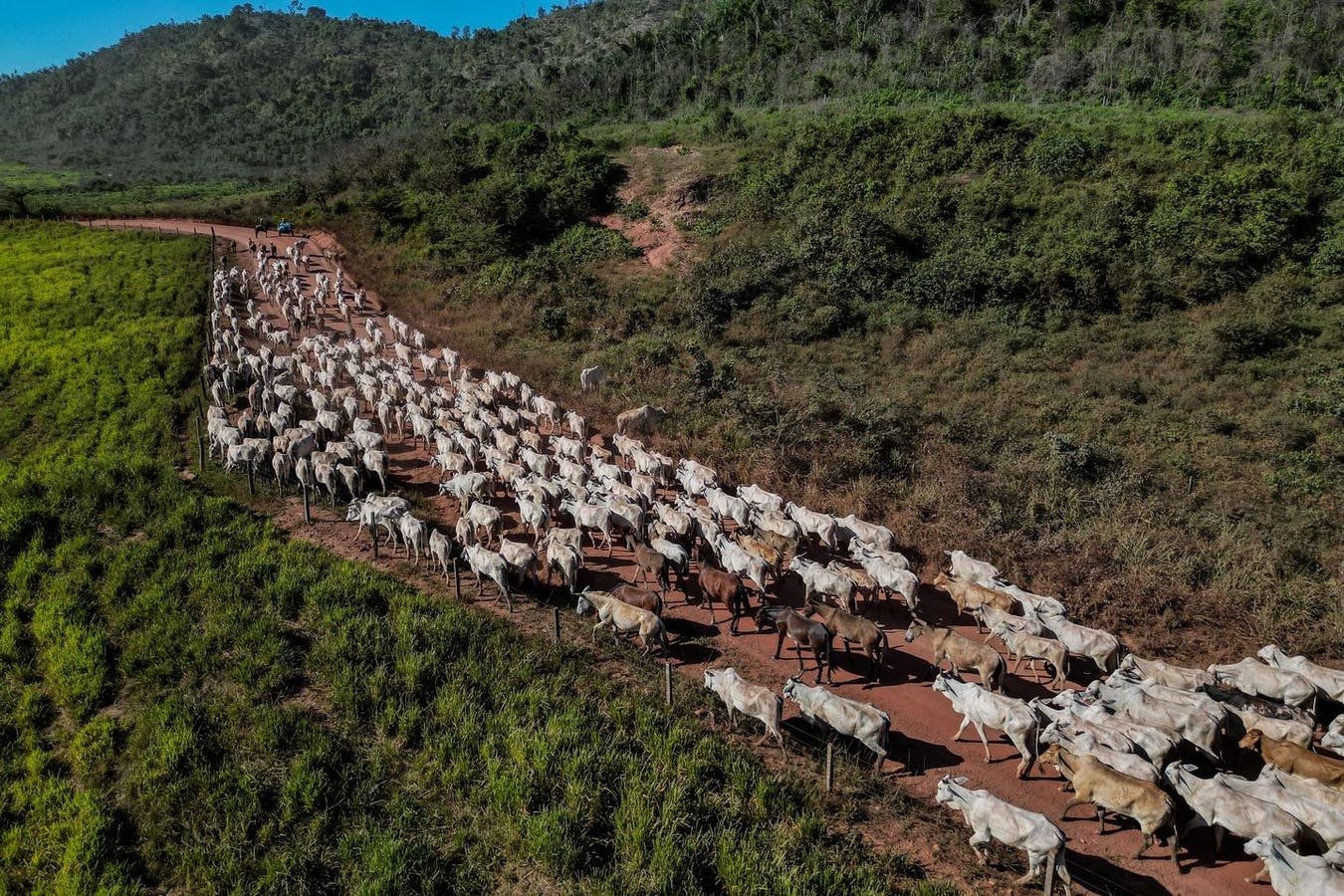
A herd of cattle is seen on a road in Sao Felix do Xingu, Para state, Brazil, on June 20, 2025. (Photo by Nelson ALMEIDA / AFP) (Photo by NELSON ALMEIDA/AFP via Getty Images)
AFP via Getty Images
In 2023 the state of Pará, located on the eastern edge of the Amazon, launched a groundbreaking initiative that could change the trajectory of cattle production in the region. With the support of The Nature Conservancy and a coalition of civil society and private sector leaders, Pará introduced the first mandatory cattle traceability program in Brazil with environmental requirements.
More than a bureaucratic control framework, it is a bold step toward transforming the cattle industry from a driver of deforestation to a force for conservation and economic development.
Why traceability matters
Cattle traceability means tracking each animal from birth to slaughter, including where it was raised and how the land was managed. This level of transparency is critical to the enforcement of environmental regulations. When producers know their cattle can be traced to deforested lands, they have a strong incentive to comply with conservation laws – or risk being cut off from the market.
Importantly, traceability enables companies and investors to identify and eliminate deforestation from their supply chains. It shifts market incentives away from habitat destruction and towards smart, sustainable land use. In short, it aligns economic interests with environmental stewardship.
A win for the environment and the economy
The environmental benefits of traceability are clear. But what’s just as exciting is the economic opportunity it creates.
A recent study by Bain & Company and The Nature Conservancy found that the Pará program could boost growth of almost 50% in the cattle industry. That’s because traceability opens doors to premium markets that demand deforestation-free beef. It also improves farm-level productivity by encouraging better land management practices and giving smallholder farmers access to new tools and technologies.
Major players in the beef supply chain have already taken note. Meatpacking giant JBS has started pilot programs aligned with Pará’s requirements and plans to scale up next year. And in April, Carrefour, Brazil’s highest-grossing supermarket chain, joined meat packers in by signing a statement of support for the Para Sustainable Cattle program.
This kind of leadership sends a strong message: the market is ready for beef without deforestation.
RIO BRANCO, ACRE STATE, BRAZIL – 18/6/2024: Deforestation of the Amazon for cattle ranching illustrated by a recently cleared pasture dotted with white cattle in a setting of intact but threatened rainforest. This shows the escalating conversion of primary forest to pasture due to agribusiness demand and land use policies. (Photo by Ricardo Funari/Brazil Photos/LightRocket via Getty Images)
Brazil Photos/LightRocket via Getty Images
Changing the Narrative
For too long, the global debate around conservation and development has been framed as a zero-sum game. Forest protection, we are told, comes at the expense of economic development. But the Pará initiative turns that narrative on its head.
By tapping into the business opportunities created by environmental regulations, companies gain a first-mover advantage in securing resilient, sustainable supply chains. They meet growing consumer demand for ethical products, unlock new commercial opportunities in markets that limit imports linked to deforestation, and make significant progress towards their own climate and nature commitments.
That’s good politics, but it’s also smart business.
A model for the world
The success of the Pará program could have ripple effects far beyond Brazil. As the host of this year’s UN Climate Conference in Belém, the state has a unique opportunity to demonstrate how industry and conservation can work hand in hand.
But for this model to realize its full potential, more companies need to get involved. Carrefour’s support is a promising start, but wider adoption across the retail and food sectors is essential. Governments also have a role to play by creating traceability-capable environments and enforcing environmental laws.
Efforts to address a warming planet and increased extreme weather events require bold action on many fronts. However, few interventions in the food system deliver as big a boom as cattle traceability. It is a solution that tackles deforestation, supports rural livelihoods, enhances food security and helps stabilize the global climate.
The Amazon is often called the “lungs of the Earth”. If we want these lungs to keep breathing, we must act now. And thanks to the leadership of Pará and her partners, we have a plan for how to do it.
