











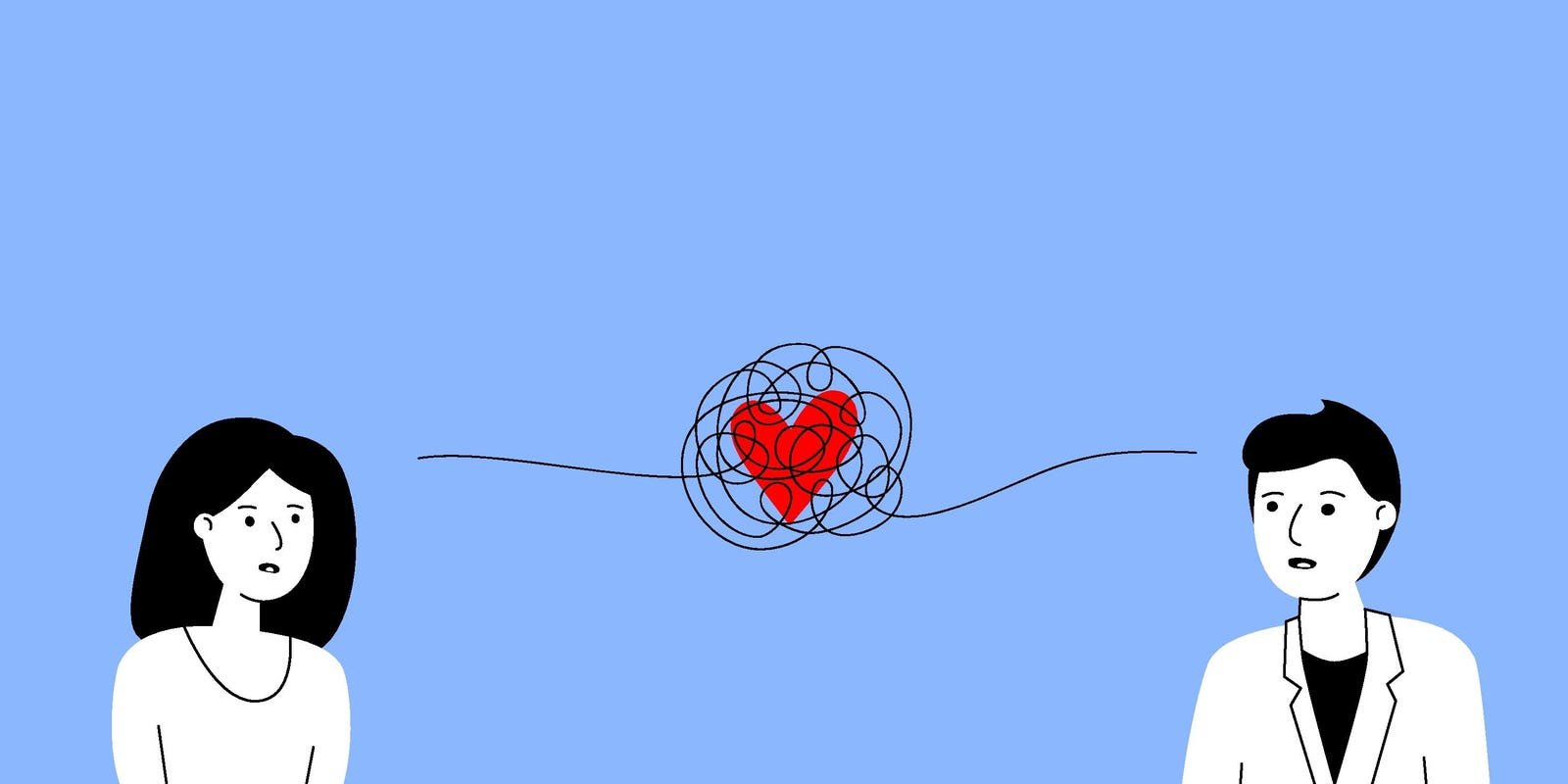
When you choose to stay in a relationship that no longer serves you, you are often operating out of fear rather than alignment. Here are three reasons why this is the case.
getty
When we see people who stay “too long” in a relationship, the focus almost always lands on the moment they finally leave. For the couple personally, the mystery of “what set it off,” “what broke it,” “what tipped the scales,” becomes the subject of interest. It is also considered as the moment of ultimate truth.
But the real story is in the quiet years leading up to the end of the relationship cycle. The years when the relationship did not thrive, but the partners convinced themselves that it was “good”. When their instincts said “that’s not it”, but their “better sense” decided, “maybe it’s safer to stay”.
People don’t stay in unfulfilling relationships because they lack rationality or the ability to reason. they stay because they are human. The reason we feel pulled to stay beyond the point of growth reveals deep truths about attachment, fear, identity, and the stories we tell ourselves to cope.
Here are three research-backed reasons people stay in their relationships longer than they should.
1. You stay because you equate familiarity with safety
The hardest part to come to terms with here is that the nervous system doesn’t categorize things as “healthy” and “unhealthy.” It only categorizes them as “known” or “unknown”. If an emotional pattern resembles one you learned early in life, your body reads it as security, even when your mind knows it’s anything but.
Neurobiological models show that early caregiving experiences are stored as “attachment schema” and function somewhat as predictive maps for relationships. These neural circuits override your automatic thought processes, making you believe against the evidence that “this is how proximity works.” They dominate even if the relationship pattern is inconsistent, distant, or overwhelming. These projections shape emotion regulation and relationship choices in adulthood long before conscious logic enters the picture.
This is the partner’s unpredictability can feel like chemistry, if inconsistency once served as a cue for connection. And why distance in a relationship can seem normal if intimacy initially came with unexpectedness. What a person experiences as “love,” then, may simply be their nervous system recognizing an old pattern.
This does not mean that they choose the wrong people on purpose. It just means that their body chooses what it recognizes. Perhaps for them, unconsciously, moving away from a relationship means moving away from the emotional context that has been their only reality for decades.
So, it’s bound to be questionable. But their recovery can begin with understanding that what feels right isn’t necessarily good. And, perhaps most importantly, what feels strange isn’t always dangerous. The restlessness we feel in new relationships is probably just the discomfort of getting used to a new love language.
2. You’re staying because you’re trying to heal an old wound
One of the most overlooked reasons people stay in unfulfilling relationships for too long is the quiet pull of the repeat-compulsion cycle, recreating unresolved emotional experiences with new partners. While it may seem like self-sabotage on the surface, it’s actually an unconscious attempt to resolve what once felt overwhelming.
Studies in recurring traumatic dreams they show the mind revisiting old wounds in order to master them, turning impotence into action and chaos into coherence. People revisit threatening or painful scenarios during recurring dreams because the psyche is trying to integrate what was once fragmented and unbearable.
In waking life, the repetition compulsion works similarly. We are drawn to relationships that resemble early traumas because, on some level, we are trying to rewrite the original story.
Someone who chooses to stay with partners who give periodic validation may have felt invisible growing up, and their soul may be trying to resolve the pain of invisibility through them.
The painful paradox, however, is that representation does not lead to resolution. Just as traumatic dreams recur precisely because the fear has not yet been internalized, these relationship patterns continue because the wound is still unresolved. The partner becomes less of a partner and more of a symbolic figure. act as a basis for the original source of pain.
Deeper healing requires a person to stop using the relationship as a site of repair and bring their focus back to themselves: their boundaries, their narrative, their story, and their healing. They should aim to see the relationship for what it is, not the arena in which their past could finally be redeemed.
3. You stay because you fear the uncertain future more than the unhappy present
Even highly intelligent, emotionally aware people underestimate the power of uncertainty aversion. The human brain is hardwired to avoid danger (both social and relational) because, historically, disconnection from one’s connected group has had life-or-death consequences. Modern life is more secure, but the wiring remains the same. This is why an unsatisfying relationship can feel strangely “safer” from the prospect of life after it.
A 2023 studyfor example, he found that people stick with their choices not only after positive reinforcement but even after negative feedback, showing a pattern of cognitive inertia. The brain exerts less effort when it stays put, and some people stay committed simply because the absence of clear cues or the presence of discomfort does not outweigh the internal cost of change. In other words, the mind predetermines the status quo because changing course requires more cognitive and emotional work than staying the course.
This happens in questions that people silently dread:
- “What if I never find someone else?”
- “What if starting over is worse?”
- “What if I regret leaving?”
When these questions arise, it can be an indication that the brain is destroying the future because the present situation still feels familiar enough to navigate safely (even when it is a source of unhappiness).
This inertia is further magnified by the psychological toll of withdrawal, be it logistical, emotional, financial or existential. The bottom line is that people don’t make choices based on benefits. they make choices based on expected losses. And so, people stay until the pain of staying finally overcomes the fear of entering the unknown.
The antidote here is confidence. When you create a clearer internal map of yourself and what you need, the future stops feeling like an empty threat and starts feeling like terrain you can navigate. And then leaving doesn’t feel like they’re going deeper into a black hole, because it’s like a real step toward alignment.
People often judge themselves harshly for staying “past the expiration date.” Do you too or are you actively taking steps to change? Take it Relationship Control Scale to find out.
Want to know who your historical personality twin is, as well as your historical opposite? Take it Historical Figures Quiz for an instant response.


