










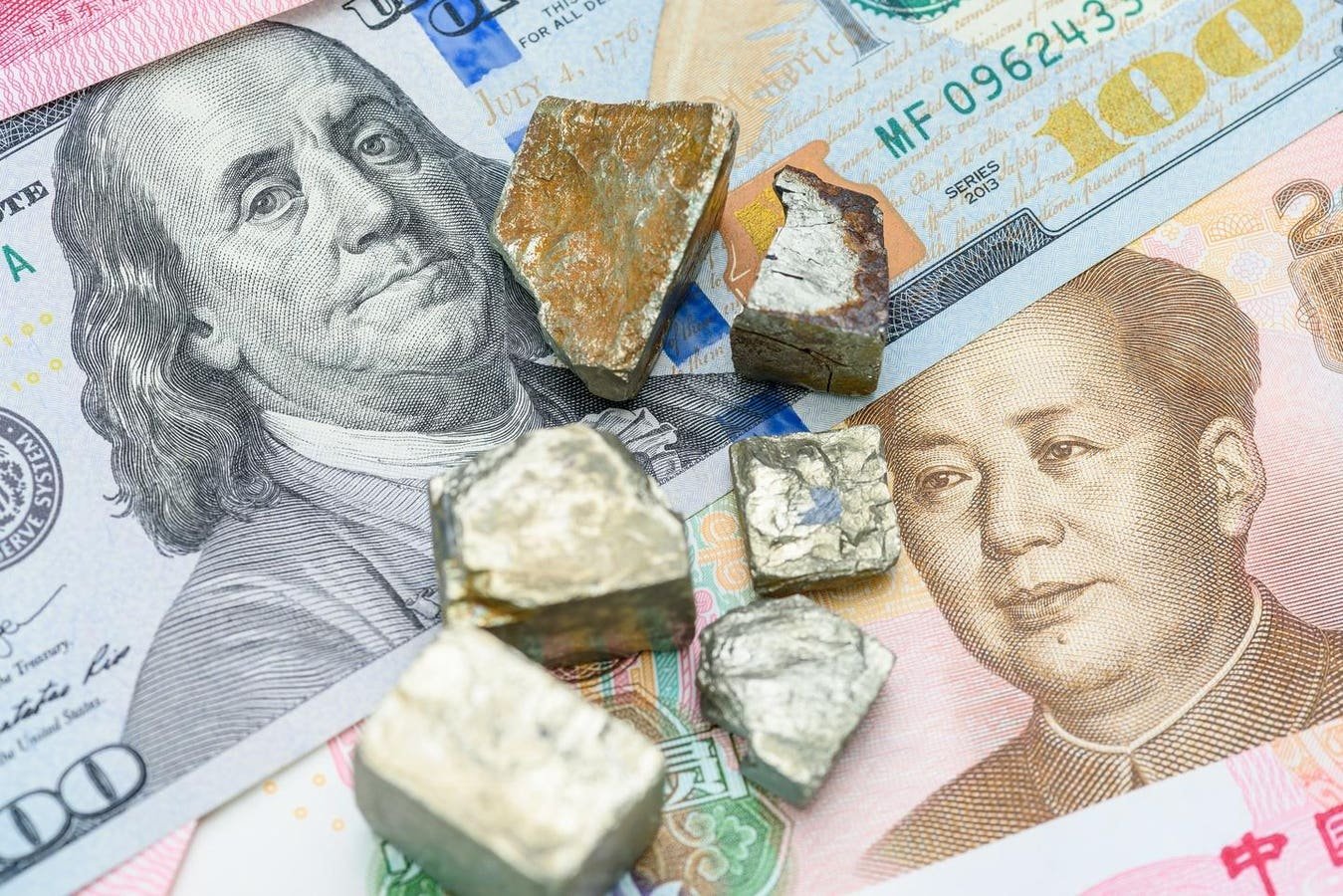
Critical minerals and rare earths in US-China trade.
getty
The US currently leads the European Union in efforts to reduce dependence on imports of critical minerals and will depend on external sources for raw materials in the long term.
In a new special report called “Critical raw materials for the energy transition—not a fixed policy,” the European Court of Auditors revealed that the EU is hampered by difficulties with mineral processing and delayed mining projects.
The study, which focused on the raw materials necessary for EU states to increase energy independence, provided a broad reality check on the state of vital minerals.
“EU demand for critical raw materials will continue to be largely met by imports in the short, medium and long term,” the report said, adding that “efforts to diversify imports have yet to produce tangible results.”
The EU Court of Auditors noted that the EU’s intention to increase domestic extraction of strategic critical minerals is problematic due to underdeveloped exploration activities and long timelines for starting mining projects.
The EU’s Critical Raw Materials Act set non-binding targets that domestic sources of vital minerals should provide at least 10% from domestic extraction and at least 40% from processing by 2030. However, the average timeline for opening a mine in the EU after mineral deposits can span two decades. For example, “it can take over 30 years to open a mine in Sweden,” the report notes.
Roadblock to projects vital to mineral development
Buildings of the European Court of Auditors in Luxembourg.
European Court of Auditors/European Union
The production of critical materials involves the extraction and processing of minerals, as most cannot be used in their raw natural form.
“Converting a raw material from ore, mineral, plant product or waste requires specialized technologies and skills. For example, the processing of rare earth elements is one of the most complex challenges in modern metallurgy,” the report said.
The report also analyzed key barriers to the development of critical minerals in Europe:
• Lack of exploration,
• Inadequate technologies and facilities,
• Insufficient core funding,
• Lengthy licensing procedures.
How the US Competes in Mineral Development
U.S. Secretary of the Interior Doug Burgum speaks as President Donald Trump announces the creation of the U.S. Strategic Stockpile of Critical Minerals.
Getty Images
In contrast, the US domestic critical minerals industry is currently undergoing a strong revival. The Trump administration has pushed federal agencies to leverage financial and regulatory capabilities to boost activity within the U.S. supply chain for critical minerals.
The federal government is directing millions of dollars in grants to accelerate technological progress and collaborative developments with private industry in mining and critical mineral projects.
Last year, the US Department of the Interior’s Geological Survey increased its 2025 critical minerals list to 54 and added six new substances. The USGS also names samarium as the most vulnerable critical mineral in the US supply chain. Samarium it is used for defense technology, cancer treatments and navigation.
On January 14, President Trump issued a proclamation titled “Adjusting Imports of Processed Critical Minerals and Their Derived Products into the United States” to authorize potential actions to prevent critical mineral imports from threatening national security.
Management places great emphasis on obtaining critical minerals from recycling and extracting scrap materials. Millions of dollars in grants have been made available for pilot projects to transfer advanced technologies to the private sector.
Can the EU compete? To do so, European nations will have to make concerted efforts to overcome uphill struggles.
The auditors noted that “most EU recycling targets are not specific to individual raw materials” and “fail to incentivize the recycling of individual materials – especially those that are more difficult to extract, such as rare earth elements in electric motors or palladium in electronics. They also fail to encourage the use of recycled materials. competitiveness”.
It is clear that the US is leading the way in reducing national dependence on foreign sources for critical minerals that are fundamental to national security and economic sustainability. Closing the gap in the EU will require a renewed look at policy and new initiatives by private industry to invest in critical mineral resources.


