










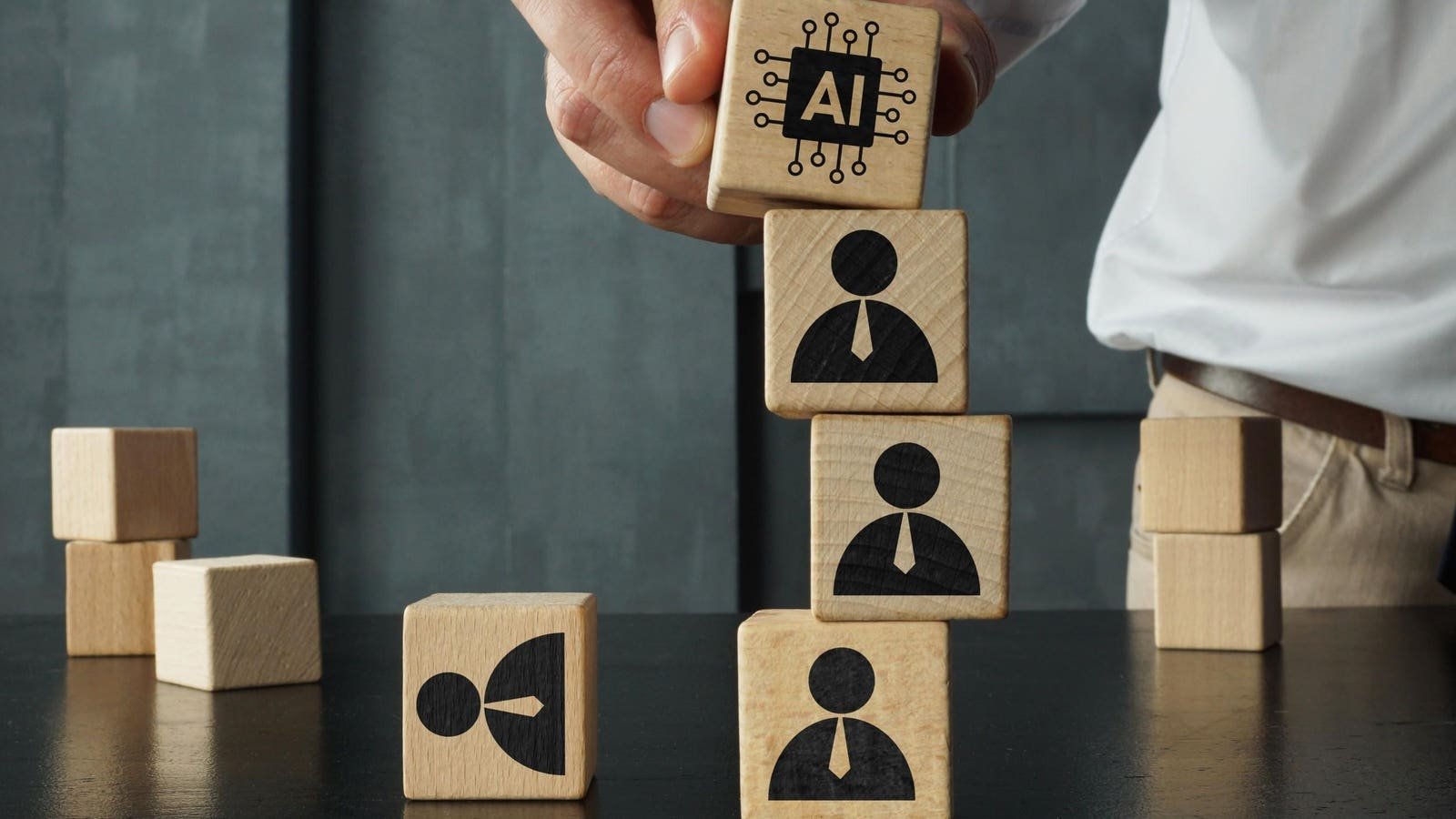
Artificial intelligence is set to reshape workplace hierarchies, empowering individuals to do tasks that once required entire teams.
Adobe Stock
Artificial intelligence could soon change one of the oldest business rules, the idea that power comes from seniority, experience and position.
For decades, the corporate pecking order was relatively clear. Senior leaders set direction, managers coordinate work, and expert professionals build status through knowledge, qualifications, and experience. Artificial intelligence is now beginning to disrupt this structure.
A junior employee with strong AI skills can already produce work that once required researchers, analysts, designers, managers and technical experts. Doctors, lawyers, bankers, marketers, product managers and other knowledge workers are seeing parts of their expertise supported, accelerated or automated by machines.
The real disruption is that AI is changing the source of power in the workplace. Influence will increasingly come from the ability to put AI to good use, redesign workflows and multiply performance, not just antiquity.
This does not mean that hierarchy disappears. It means that old signals of authority, such as tenure, job title, and specialized knowledge, will sit alongside new signals of influence, such as AI literacy, adaptability, and the ability to redesign how work is done.
This raises a pressing question for business leaders. What happens when the people who understand AI best aren’t necessarily the people at the top?
How artificial intelligence is changing who holds power at work
Hierarchies exist for a reason, and most organizations adhere to conventional structures that include senior managers, middle managers, and workers. Responsibility is distributed accordingly, with leaders responsible for results, managers for implementing and overseeing workflows, and workers for executing the work.
Today, however, a single worker, particularly in professional and knowledge-based fields, can use AI tools to perform tasks that once required support from an entire team of managers, supervisors, researchers, designers, and technical experts.
This means they can recreate entire workflows on their own.
A marketer can use AI to conduct market research, create a campaign, personalize it for individual customers, analyze its performance, and then do it all again, learning from past results.
A product manager can design, build and test prototypes using AI coding tools, quickly understanding how a new idea will work, without a long and expensive research and development process.
People who can do this well and teach others will inevitably see their value to their organization increase. This could set the stage for a major realignment of forces.
Within this new dynamic, individuals, teams and organizations that successfully adopt AI are likely to find themselves punching above their weight when it comes to gaining influence, promotion and leadership opportunities.
This raises difficult questions for managers. Many management tasks, from monitoring progress to summarizing updates and allocating resources, can already be supported by artificial intelligence. The managers who will remain most valuable will be those who can guide people, exercise good judgment, resolve complexity, and help teams use AI responsibly.
The challenge will be to ensure that opportunities and advantages are democratized and spread widely, rather than concentrated in small groups with privileged access to tools and AI-friendly workflows.
What should leaders do to prepare?
I believe it’s about managing inevitable change in ways that avoid new divisions, organizational barriers, resentment or damage to corporate culture, while ensuring that the people who can use AI to drive real change get the support they need.
This means shifting the focus from the technology itself to the opportunity. As many people as possible should have the opportunity to understand AI, experiment with it safely, and apply it to the work they already do.
A good starting point is to treat AI literacy as a universal skill rather than a specific technical ability. Whatever one’s job, they should understand the risks and opportunities of AI as it relates to their role and the business as a whole.
Leaders must also think carefully about how performance is measured in a world where artificial intelligence can dramatically enhance the contribution of an individual or a team. Output, speed, and productivity may increase more easily, but judgment, accountability, and responsible use of AI will become even more important.
This means providing broad access to tools and training, redesigning performance measures, tracking new differences between AI-enabled and AI-excluded workers, and updating accountability as more decisions become automated.
Beyond the workplace, ensuring equal access to AI opportunities will become a major challenge for society.
AI will undoubtedly help new voices emerge in politics, and we must balance this potential for change and growth with the risk of concentrating power in the hands of those with the most access to technology.
AI will change the corporate hierarchy by changing who can create value, who can influence decisions and who is heard. The smartest organizations will prepare for this power shift now by building AI literacy broadly, carefully redesigning work, and ensuring opportunities grow across the organization rather than clustering around a small group of AI insiders.


